Assessing Blight

Detroit, my long-ago home town, “is one of those taxing places that require you to have an opinion about them,” says Paul Clemins in the New York Times.

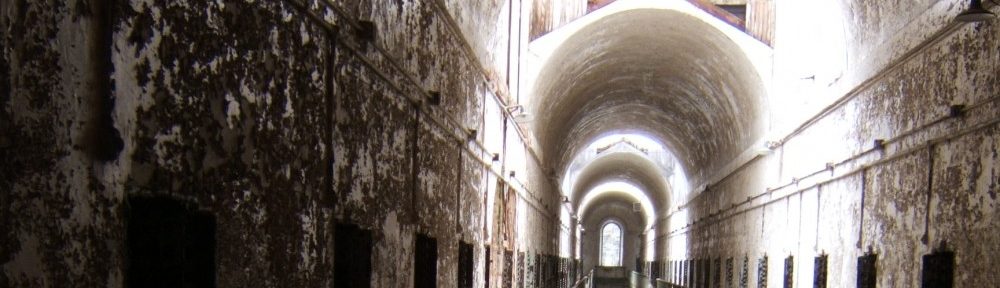
Numerous recent books, films, and photo essays have tried to shape and inform those opinions, and I’ve covered a number of them on this website, from the ruin porn phenomenon, to the Heidelberg Project, to the threat to the Detroit Institute of Arts. The plot-thread of of this once-great city was allowed to unravel until the American automotive dream drove right out of town. City lots filled with abandoned homes, the wrecked shells of once-beautiful buildings, suitable for nothing more than desolate parking lots.

A story by Monica Davey in the Times this week describes yet another effort to get a handle on the devastation. A central office is collecting information and photos of every abandoned and dilapidated building in the city, recorded by teams outfitted with computer tablets. The comprehensive database they are compiling will be ready this spring and is expected to help city leaders decide what to try to save and what to demolish.

Former Mayor Dave Bing suggested shrinking the city to a core that could be maintained, instead of continuing to provide city services to blocks with only one or two standing, habitable houses. But even people residing on empty streets that look like farmland—and in some areas actually are being farmed—don’t want to give up their homes. Some officials say demolishing the worst buildings might cost $1 billion, while a public-private effort called the Detroit Blight Authority has begun an aggressive demolition campaign, clearing lots that will become . . . . ? Enough human drama here for scores more books and films.

On the list of LA Times finalists for 2013’s best current issues books is Detroit native and journalist Charlie LeDuff’s Detroit: An American Autopsy. It tells the history of a city, but more important, the stories of the people struggling in it. In his review, Clemins says, “Many city supporters [and a nascent creative class is among them] will object to the ‘autopsy’ in the subtitle, though it’s not the suggestion of civic death that rankles. Rather, it’s the suggestion of the surgically precise.” As the teams of surveyors roaming the streets who are in a sense conducting that autopsy can attest, decay is a messy business.

It’s the Chills that Count!

Two weeks ago, this blog started a discussion of the differences between mysteries and thrillers. As reader David Ludlum pointed out, there can be elements of mystery in thrillers and vice-versa, since both contain suspense. Here are a few items from Carolyn Wheat’s handy list of the differences: mystery is a puzzle, suspense is a nightmare; in a mystery, the detective has skills, and in a thriller, the hero learns skills; mysteries have clues, while thrillers have surprises; and a mystery offers red herrings, whereas a thriller contains “cycles of betrayal.” John le Carré’s Tinker, Tailor, Soldier, Spy comes immediately to mind.

This week, I’m reading a mystery—Maze in Blue, by fellow U. of Michigan alumna Debra Goldstein—and the pages are littered with clues, potential clues, and red herrings. The fun is sorting them out, not to mention the familiarity of the Ann Arbor setting!

Coincidentally, the book mentions a real-life murder I was familiar with, one in a serial killer spree that began shortly after I graduated. A law student was murdered and her body draped over a tombstone in a local cemetery. Reading about the case several months after I moved away, I had a horrible flashback. On a warm spring evening in my senior year, I was pacing my second-floor apartment in a chopped up Victorian house, talking on the phone to a friend. I noticed a man standing across the street looking up into my tall second-floor windows, open to the fresh air. I didn’t pay much attention until he crossed the street, headed toward my house. The back of my neck tingled. “I think he’s coming over to look at my mailbox,” I said, slightly embarrassed to sound so paranoid. My friend and I talked a little longer, and the man recrossed the street, disappearing into the apartment building opposite. As soon as we hung up, my phone rang. “You don’t know me, but . . .” and he gave me his name. Yes, he had read my name on my mailbox, and he asked me out. “I don’t think this is a very good way to meet people,” I said and hung up, shaking, even though in those days such a casual meet-up was common. I called my friend back. “If I’m not in class tomorrow, here’s the name he gave”—the same name written in the calendar of the murdered law student on the day she disappeared. So Goldstein’s book has some resonance with me.

The most recent thriller I’ve read is Alan Furst’s latest, Mission to Paris, and while I don’t have the same kind of personal connection with pre-World War II Europe, Furst’s evocation of the era through his wonderful series of books immediately puts me there. In this one, Hollywood actor Fredric Stahl find himself enmeshed deeper and deeper in the snares of opposing spy machines and Carolyn Wheat’s “cycles of betrayal.”

Another superb read this year in the pre-war thriller mode is Erik Larson’s In the Garden of Beasts, with one big difference: it’s all true.

In their Words: Interviews with Carolyn Wheat, Alan Furst, and Erik Larson on the books mentioned here.