*****The Crossing

Cormac McCarthy – Part II of McCarthy’s The Border Trilogy. This book is a force of nature, describing three lengthy horseback journeys from New Mexico to bleak and impoverished Old Mexico before and during World War II. The prose mostly moves forward at the pace and with the deliberation of a man on a horse, with occasional galloping, heart-stopping passages. The poor people 16-year-old Billy Parham encounters seem mostly willing to share what they have with him, including their stories and their hard-won philosophy, while the well-off, few in number though they be, seem intent on stealing or denying him what little he has. McCarthy never tells us how Billy feels about any of this, only shows us what he does about it, as he struggles to maturity and to maintain his integrity. The detailed sense of place makes the reader feel he has been on these melancholy and bitter treks, too. A thrilling read for the purity of the vision and the power of the words. Some favorite metaphors: “As if the darkness had a soul itself that was the sun’s assassin hurrying to the west as once men did believe, as they may believe again.” ” . . .the fence running out into the darkness under the mountains and the shadow of the fence crossing the land in the moonlight like a suture.”  And his matchless dialog, half of which is in Spanish but easy to follow.


Enhanced by Zemanta

Hot Ticket

Ra Paulette, Academy Award, documentary, Cave DiggerImpossible to view and practically ignored a few years ago, the Oscar-nominated short films have become one of the hottest tickets around. Last night I saw the documentary shorts and later today will see the live action shorts. These viewings are courtesy of the Trenton Film Society, which shows the films at the intimate Mill Hill Playhouse in Trenton. (The festival also offers the nominees in the animation category.)

In recent years the short films have become available through Netflix and other resources, but I like the Big Screen—well, the Bigger Screen—at the Playhouse.

Only one overworked word describes the five documentary shorts: Awesome.

  • A 109-year-old Holocaust survivor, Alice Herz-Sommer (obituary, 2/27/14), who played the piano in Theresienstadt and was still playing at the time of filming, who says, “I love people” (The Lady in Number 6: Music Saved My Life).
  • A gay man, nearly beaten to death as a teenager, becomes acquainted with the former skinhead who was one of his attackers (Facing Fear)
  • The Yemeni protests that turned violent and led to the ouster of President Ali Abdullah Saleh, seen through the eyes of youthful cameramen (Karama Has No Walls)
  • Unlikely artist, Ra Paulette, working alone and by hand carves magical caves out of soft New Mexico sandstone (Cave Digger)
  • The last days and death of convicted murderer Jack Hall in the loving care of inmate volunteers in an Iowa prison hospice (Prison Terminal: The Last Days of Private Jack Hall)

Real people doing amazing things. Truly awesome.

End-Game for Downton?

Downton Abbey, Julian Fellowes

Highclere Castle, filmic home of Downton Abbey (photo: farm9.staticflicker)

In an interview with the New York Times, Downton Abbey creator Julian Fellowes allowed as how the show isn’t like a soap opera that can go on for decades. Seems it’s like a soap opera that can go on for no more than 10 years, he thinks. Next season will be season five, so he’s thinking about an end-game. Last night’s season finale—if not the whole season—left some critics cold.  “What happened to the formerly addictive, splendid, elegant costume drama?” asks Daily Beast reviewer Kevin Fallon. Not enough, in his opinion. Not enough change. Especially last night, when Charles Blake was revealed as an aristocrat himself, which relives Mary of one terrible choice. The mention of Brown Shirts as the possible attackers of Edith’s lover was a dark bit of foreshadowing that change may finally come to Downton.

Finding the Soul of the City

“The soul of a city can be found by talking a walk”—the premise and inspiration for generations of street photographers. In the February 2014 Metropolis, Jeff Speck, city planner, architect, and sustainable growth advocate writes about his book, Walkable City, claiming such visually rich environments are “better for your soul.”

Every Picture Tells a Story

Walking is certainly a better way to get a closeup look at the life going on around you. He illustrates that point with scenes of timeless urbanism captured by some of the giants of the street photography genre—Gary Winograd, Lee Friedlander, Vivian Maier, and others. The daily activities that animate city streets produce layered insights about both places and people. In a vital urban scene, “the presence of difference”—in ethnicity, race, class, income level, occupation—suggest endless story possibilities.

These images may require a second, even a third look, but it is clear why such photographs are often used as writing prompts.  What’s going on between those two? What are they looking at? What are they thinking? Why did he wear that?


Walkable ≠ Happy

Canadian journalist Charles Montgomery’s book, Happy City: Transforming Our Lives Though Urban Design, agrees that walkability may be a component of a healthy city, but alone it cannot make a city a happy one. A more complex set of elements contributes to people’s assessment of their own well-being. Photographers have captured these factors, too:

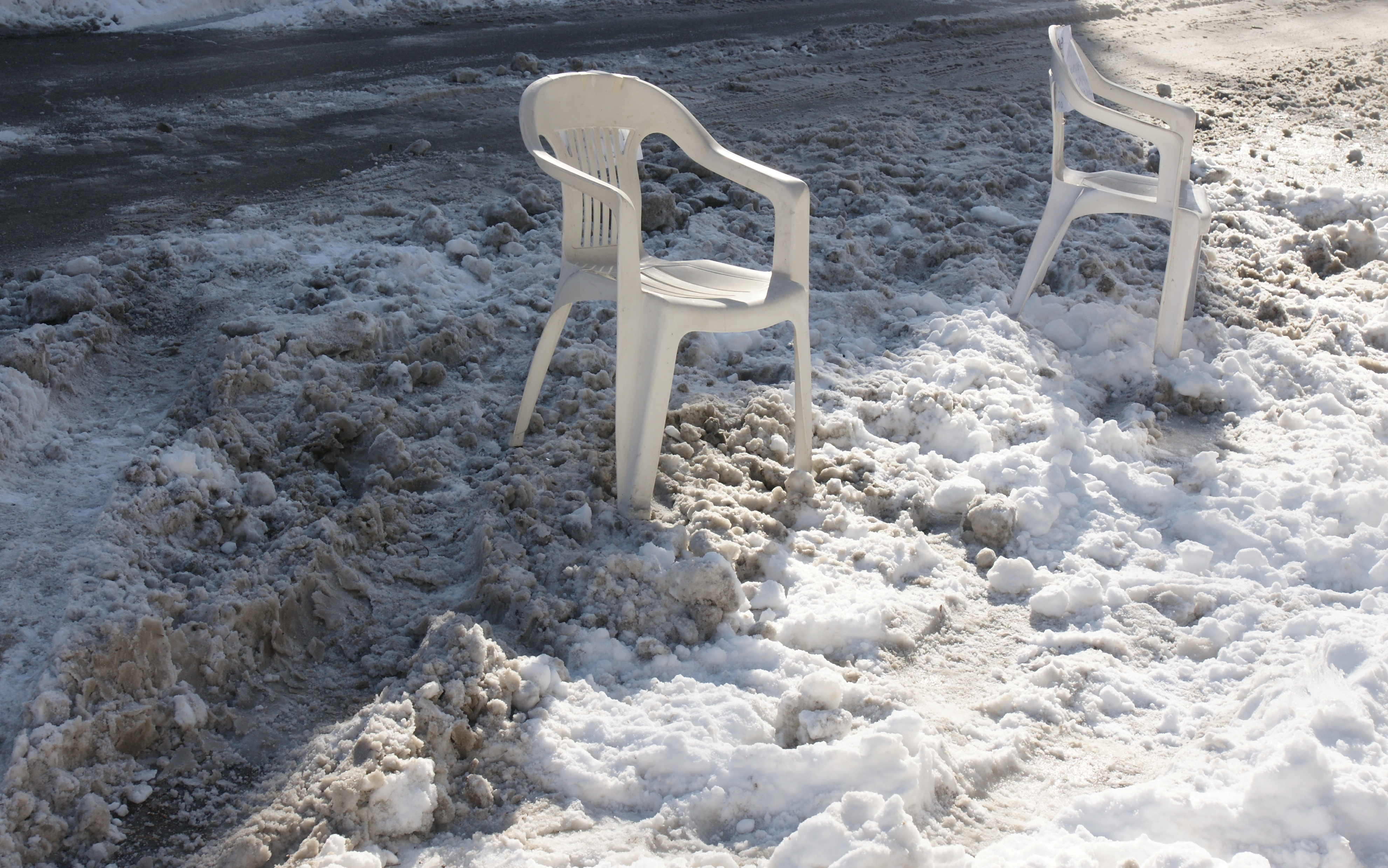
  1. elbow room (“People like their space”)—think about how kids tag every graffiti-friendly surface, it’s a way of claiming something distinctly, if momentarily, theirs; or consider the “reserved” parking place
  2. green space—and not just the occasional pocket park, but big swaths of it worthy of Frederick Law Olmsted, connected in continuous corridors, perhaps helping to explain the runaway popularity of the High Line, and
  3. economic justice. In other words, a city cannot be happy when a large segment of its population is much poorer than the rest.

Quality of life may be high in great, high-status cities, but that “does not translate into feelings of well-being . . . where social stratification creates a culture of status anxiety.”  Those tensions, too, are evident in photographs of many urban streetscapes.

walkability, streetscapes, urban life, High LineMore:

  • Jeff Speck’s TED talk on the walkable city.
  • The 10 U.S. cities having the most people who walk to work.
  • How cities are trying to become more walkable.
  • What’s the “Walk Score” for your address (U.S., Canada, and Australia)? Moving? Find walkable places to live.  My neighborhood’s Walk Score is 35, compared to New York City’s 88.
  • Many of Vivian Maier’s works can be seen on the Artsy website’s Vivian Maier page.

***** Life After Life

By Kate Atkinson – Narrated by Fenella Woolgar – This much-praised 2013 novel by English writer Atkinson allows her main character, Ursula Todd, to live her life again and again “until she gets it right.” It begins in 1911, with Ursula’s birth and almost immediate death and takes the character through multiple lives in which her and her family’s fates play out in different ways. Reviewers have different interpretations of Atkinson’s intent, but my interpretation is how near we skate to disaster simply living day to day. Insignificant decisions–whether to walk home with childhood friend Nancy–have significant consequences. It’s well worth a read (or a listen), as the themes of Ursula’s life and the events in it carry increasing resonance. Ursula’s World War II experiences are riveting. (2/19)

True Detective

Been enjoying Matthew McConaughey and Woody Harrelson in HBO’s True Detective? Think there’s more there there? Maybe you’re right. I’m not surprised that its weirder elements are generating the kind of easter egg hunt inspired by Twin Peaks and similar entertainments: the human mind searching for connection and sense in chaos. “I think I see a pattern here!” The hunt is so much easier with the Internet, and some people are making discoveries for the rest of us to ponder. There’s the whole thing about The Yellow King, for instance, covered extensively,  and the flatness of time.

The show continues to receive excellent reviews, and you can watch it oblivious to the layers of arcane references and just focus on the psychological interplay among the characters, but for gold-miners, there’s that, too.

*****The Goldfinch

By Donna Tartt – The 1654 painting, The Goldfinch, animates the action of Donna Tartt’s third novel, which is receiving much-deserved attention (and the Pulitzer Prize). The story begins when twelve-year-old Theo is injured in a terrorist explosion at the Metropolitan Museum, and an elderly dying man orders him to pick the painting—which happens to be one of Theo’s mother’s favorites—out of the rubble. Stunned, confused, and pretty much ignored in the aftermath of the explosion, he stumbles home to show it to her. Yes, there is an over-long interlude in Las Vegas when Theo lives a feral existence with his father and delightfully reprobate Russian friend Boris, and yes, it ends with a rambling 20-page essay. Still, it’s a wonderful adventure story that at its heart is about how we decide what’s important in life, what’s real to us and worth saving, and what is simulacrum and worth saving anyway. In that essay was one of my favorite lines of the book, about how different people are strongly, inevitably drawn to certain things—“a city, a color, a time of day. The nail where your fate is liable to catch and snag.” Don’t let the length put you off–it’s a page-turner.  (2/10)

**** The Luminaries

By Eleanor Catton –  Narrated by Mark Meadows – 29 hours, 14 minutes — When will I learn I can read faster than I can listen? This book was an interesting choice for the 2013 Man Booker Prize, as its style is so “unmodern” and seemingly born of the era it describes: the 1866 New Zealand gold fields. Catton expertly weaves together the stories of a half-dozen principal characters and at least a dozen more half-principal (or half-principled) ones trying to unravel the mystery behind a series of local events–a disappearance, a possible attempted suicide, and the death of a drunkard with a fortune in gold hidden in his cabin. At first the story is a deliberate muddle, but as the seemingly disconnected actions of this multitude of characters is brought to light, the reader assembles a gigantic, delightful literary jigsaw. Mark Meadows does an amazing job developing a unique voice for each character and delivering the reading with pizazz. But it’s a lot to keep track of. Much as I admire his reading, I recommend the print version. (1/25)

Best Reads of 2013

’Tis the season for “best of” lists, and reading other reviewers’ lists of “Best books of 2013” is setting up my reading list for 2014 very well! Truth is, there are so many good new authors and so many interesting non-fiction books, being totally current seems hopeless.

Of the 52 books I read (or listened to—sometimes, an even better experience!) in 2013, here are the nine I liked best, the ones I gave five stars. The four-star books were pretty darn good, too. The entire 2013 list is on this website under “Reading . . .” Below my top picks are presented in no particular order, with my two absolute favorites appearing at the end.

***** The Empty Room – Lauren B. Davis escorts us deep inside the head of Colleen Kerrigan, an alcoholic, on the “worst-day-of-her-life.” A trip full of insights and terror that helps us better understand people in our own lives and their demons.

***** Victoria’s Daughters – Jerrold M. Packard. Getting all this complicated royal genealogy straight—given that Victoria’s descendants populated most of the thrones of Europe—and the different fates of her five daughters was fascinating. It’s hard to believe that Victoria, still so influential a presence in our literary minds, is the Great Great Great Great Great Grandmother of William and Kate’s son George! Full review here.

***** Flight Behavior – Barbara Kingsolver. A misdirected swarm of Monarch butterflies starts this novel on its way, intermingling science and belief and the priority a cast of mismatched characters place on each.

***** Gone Girl – Gillian Flynn. A deathmatch between two manipulative people that causes the reader to continually switch assumptions and allegiances.

***** The Crimes of Paris: A True Story of Murder, Theft, and Detection – Dorothy and Thomas Hoobler. The late 19th century Parisian demi-monde and the rise of scientific criminal detection. Full review here.

***** Telegraph Avenue – Michael Chabon. His usual high-quality writing and vivid characters whose fortunes become as entangled as jungle vines. What is it about? Ultimately? Everything.

**** Swamplandia! – Karen Russell. Nominated for the 2012 Pulitzer. Wonderful writing, I gave it only 4 stars, but Russell deserves extra praise for fearlessly exploring metaphor up to (and sometimes beyond) its full potential.

***** The Dinner – Herman Koch (read by Clive Mantle). A “nice dinner out” turns into an emotional conflagration. The perfect exploration of family secrets and what it means to have an unreliable narrator.

***** Billy Lynn’s Long Halftime Walk – Ben Fountain (narrated by Oliver Wyman). A finalist for the 2012 National Book Award and winner of the National Book Critic’s Circle Award. For a war novel, there’s almost no war in it. Fountain explores the limitless terrain of hypocrisy, as a small company of ordinary American soldiers is feted for its bravery at the Thanksgiving Day Dallas Cowboys game.

Nebraska

Bad work karma has kept me away from this website, and I miss reaching out to my invisible friends.Just had to write to tell you, urge you, implore you to see Alexander Payne’s movie Nebraska (trailer here), with Bruce Dern and Will Forte. Dern is the aging dad who thinks he’s won a million dollars in a bogus sweepstakes and won’t be talked out of it.

The script spot-on captures the relations between parents and children and old married couples. Heartwarming, without being sappy. Moments of hilarity when we recognize ourselves. Reviewers who say Payne doesn’t like Nebraskans (he is one, after all) miss the whole point. People like the characters in the movie can be found everywhere, which is what gives the film its appeal.

Excellent performances from the large cast of the old man’s relatives and long-ago friends whose “congratulations!” come with a predatory gleam in the eye. (Rated 91 on the Tomatometer.)

Christopher Wallenberg interviewed Dern for the Boston Globe, and the actor—a top contender for an Academy Award Best Actor nomination and Best Actor winner at Cannes—says what he tried to do was find “real moments.” And find them he did. You can never be sure how much his character really hears or knows. More than he lets on, you may suspect. His son has the insight to look past the apocryphal sweepstakes win to see that what his father really wants is “something to live for.”

Forte plays a supporting role in both the film and the story, attuned to the possibilities of an impossible quest. Familiar to Saturday Night Live audiences, Forte nails this difficult role, making not only his character feel real, but also, by the self-effacing negative space he creates, enabling his cranky dad to become a fully realized, sympathetic person, too.  

Interesting that the film is shot in black and white, in Montana, Wyoming, South Dakota, and Nebraska. The scenes of that lovely country—plus one long shot of Mt. Rushmore—“OK, we’ve seen it, let’s go,” says the cantankerous old coot—lose nothing in the cinematographer’s soft greys and charcoals. I once worked with a brilliant photographer who only shot in black and white. When I asked why, she said, “My black and white looks like color.” So does Nebraska’s! See these inspired photos.