

created by Matt Shirk, creative commons license
You know how you don’t get around to reading a book or article only to have it pop up on your radar at just the right time? I feel that way about the February 2018 issue of Wired, that I found buried in a stack of magazines.
The theme of the issue, “The Golden Age of Free Speech,” is meant ironically. In college I was journalism major and received a heavy First Amendment dose. Courses on The Law of the Press might have tapped secondary topics like slander, libel, and plagiarism (privacy didn’t come up) on the shoulder, but they really shook hands with the issue of free speech.
These days, free speech absolutism needs some rethinking. I’d rather reflexively subscribed to the Louis Brandeis notion that the cure for bad/hateful speech is more good/uplifting speech. That’s not good enough anymore, and I recall that Brandeis also said that “sunlight is the best of disinfectants.” Too many people dangerous to good public order are lurking in the dark corners of the Internet where the light never reaches. It’s like having nests of rats in the basement. One of these days, they’re going to burst into the kitchen.
In Wired, Zeynep Tufekci, an associate professor at the University of North Carolina, who is also an op-ed writer for the New York Times, provided a way to rethink my own conflicts on the First Amendment. Here’s the key passage:
The freedom of speech is an important democratic value, but it’s not the only one. In the liberal tradition, free speech is usually understood as a vehicle, a necessary condition for achieving certain other societal ideals: for creating a knowledgeable public; for engendering healthy, rational, and informed debate; for holding powerful people and institutions accountable; for keeping communities lively and vibrant. What we are seeing now is that when free speech is treated as an end and not a means, it is all too possible to thwart and distort everything it is supposed to deliver (emphasis added).
Thinking of free speech as a means, not the end, lets us look at the ends we are achieving now and judge whether free speech is helping or harming. She goes on to say that “today’s engagement algorithms . . . espouse no ideals about a healthy public sphere.” It’s become obvious that big social media platforms’ purposes do not extend very far beyond commercial self-interest and cannot be relied upon to make those judgments.
Tufekci gave examples of society’s aims, but we also can find them spelled out in the U.S. Constitution’s preamble: “to form a more perfect Union, establish Justice, insure domestic Tranquility, provide for the common defense, promote the general Welfare, and secure the Blessings of Liberty to ourselves and our Posterity.”
It’s time to ask ourselves and our politicians whether those aims are served by unfettered speech, hate speech, propaganda masquerading as truth, and misinformation peddled by people who pretend to be other than who they are. The free speech banner isn’t big enough to hide them all.
 Looking for a weekend movie? If I had it to do over, out of these three, I’d pick First Man.
 c
c


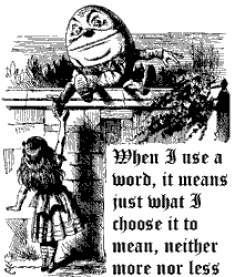 One helpful resource ought to be the Corpus of Founding Era American English, based on some 100 million words of text from 1760 to 1799 from various sources. (See how


 Reviewer


 Right in the middle of Wimbledon’s 150th Championships we scored a Netflix copy of director Janus Metz’s 2017 movie about the classic 1980 matchup between Ice-Borg and the Superbrat, with a script by Ronnie Sandahl (
 Overwhelmed by the tsunami of pettiness and downright meanness in the news this summer? These biopics make a refreshing change. RBG and Won’t You Be My Neighbor? properly celebrate two talented individuals who single-mindedly dedicated themselves to making better the lives of others.
 When I saw previews of this Morgan Neville documentary about children’s television personality Fred Rogers, I was afraid it might be overly saccharine (