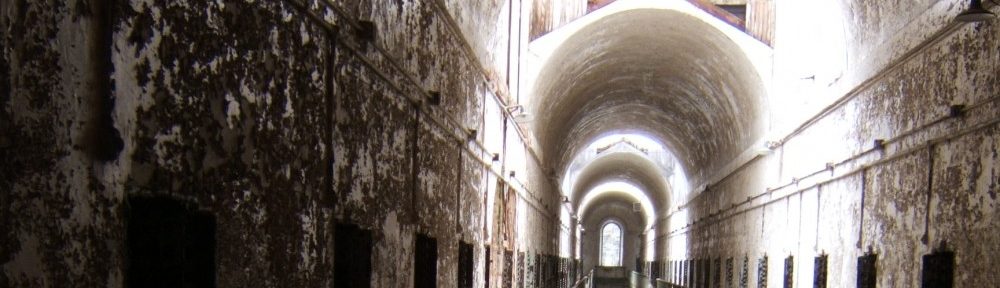
Cabaret

Kit Kat Klub, Cabaret

(photo: author)

We took Alan Cumming’s advice and went to the Cabaret (opening number) last week. Possibly I saw the movie at some point, but I’d never seen the show on stage and was interested now because of Cumming. He was terrific, of course, and Michelle Williams was a much more suitable Sally Bowles than Liza Minelli in the movie, because the thing about Sally is, she’s not that talented. She’s never going to make it big. Or even medium. Especially then and there. The theater was designed to evoke the Kit Kat Klub, and instead of orchestra front, they’d installed tiny lamplit tables. The dancers stretched and warmed up on stage, interacting with the audience to further suggest the intimacy of a club. The band did more than play the music, the players were part of the drama, and some members doubled as dancers. An experience as well as a show.

We were not at the performance where Shia LaBeouf was escorted from the theatre in handcuffs—that was the next night. Apparently he took the night club setting too literally and lit up a smoke. Was disruptive. Said Entertainment Weekly, “Not everybody is wilkommen.”

Some video in this Today show interview with Cumming.

Writing in A Digital Age

book ereader Kindle

(photo: upload.wikimedia.org)

Last week in London, the Literary Consultancy held its third Writing in a Digital Age conference. Participants heard the usual hand-wringing over the issues of digital rights management, the decline in bookstores, especially independents, and the attention-sucks of our various digital tools and devices. Panelists discussed the irony that the gadgets developed to expand reading are the very same ones that can reduce it, if what we use them for is interrupting our reading time to play a game, send an email, scan Facebook, tweet a half-formed thought, watch a YouTube cat video, and check the current weather in Paris. One speaker called them digital Trojan horses.

And while these de rigueur arguments are familiar, echoing past concerns that television would be the end of radio, and video would be the end of movies, one statement by panelist Steve Bohme, who manages the Books and Consumers survey for Nielsen, sent a chill from my toes to the roots of my hair: “When everyone you know has a Kindle, why would you buy them a book?” No more buying (and receiving) books as presents? Oh, no!

The Orchard

The Cherry Orchard, The Orchard, Chekhov, movie

(photo: pixabay.com)

Interesting experience recently, seeing The Orchard (trailer) at the Trenton Film Festival. In the story, filmed in real time, six actor friends get together for a weekend to prepare an improvisational performance of Chekhov’s The Cherry Orchard—the world’s most performed play. Excellent score by Towering Inferno.

The movie script is something of a mashup of Chekhov and Pirandellos’ Six Characters in Search of an Author, but with its own absurdist excesses. (I’ve seen Six Characters and have forgotten it in its entirety.) With the heavy regional English accents and scenes where everyone talks at once, I missed a lot, but that seems the intent.

The private arguments over which actor should play which part suggest viewers are glimpsing intimate scenes that expose jealousies, rivalries, and personal histories. But, really, they’re scripted. After a while, the story moves seamlessly into Chekhov. And out again. Some of the non-AC scenes could be 20 percent shorter, but the cast is terrific in their actor and Chekhovian personae. As the synopsis says, after this weekend, “Will they ever be friends again?” Good question.

Personally, I think Wallace Shawn’s Vanya on 42d Street (1994) was easier to watch—another movie about trying to mount a Chekhov play, but The Orchard is a worthy effort suitable for specialty audiences with a taste for fine ensemble acting.

You’ve Been Hacked!

government spying, cell phone, mobile phone, law enforcement surveillance

(photo: upload.wikimedia.org)

So how do cops and spooks steal data from your mobile phone, anyway? Research teams at the Kaspersky Lab in Russia and Toronto’s Citizen Lab independently analyzed a digital surveillance tool created by the Italian Company, Hacking Team (do watch this marketing video if you want something to think about), which more than 60 government worldwide use to snatch and record mobile phone data. The tool’s components have been designed to target Android, iOS, Windows Mobile, and BlackBerry users—one of whom is probably you.

According to a lengthy Wired article by Kim Zetter, here’s what the Hacking Team’s tool can do: collect your emails, text messages, call history, and address books; log keystrokes, reveal where you’ve searched, and take screenshots; record audio of calls and the ambient sounds in the room where the phone is; and use the phone’s camera to take pictures of the surroundings. No surprise, the tool can use the phone’s GPS system to locate it (and probably, you, too). In other words, the tool can do with the phone pretty much everything you can.

What’s new about these revelations is that this is the first time these techniques have been reverse-engineered to reveal how they really work, including how they protect themselves from detection. Here’s a blog post about these discoveries from Russian researcher Sergey Golovanov.

film noir, spies

(photo: c1.staticflickr.com)

Spies following each other through the wetly reflecting nighttime alleys of Eastern Europe will be relegated to film noir, since the above functions let a tracker follow you to that screening of 1984 and home again from some remote center. Most countries using this technology have one or two command-and-control centers to monitor multiple targets and conduct surveillance. The nation with by far the most such centers? The United States, with 64.

The genie is out of the bottle, however, and “This type of exceptionally invasive toolkit, once a costly boutique capability deployed by intelligence communities and militaries, is now being marketed for targeting everyday criminality and ‘security threats,’” say Citizen Lab researchers. Inevitably, people who shouldn’t have it, will.

Amen.

amen, Costa-Gavras, Vatican, NaziCosta-Gavras’s 2002 movie about the role of The Vatican in World War II (you can watch it here) was certain to be controversial, as opinions are strongly felt, relevant information is still secreted in Vatican archives, and the movie is based on a controversial play, The Deputy, by an erratic German playwright, Rolf Hochhuth. (The movie promotion, like this poster, offended many, as well.)

Most interesting is the portrayal of an SS officer hired to help “control vermin” at military bases—typhus was a big problem—using deadly Zyklon B gas. At a concentration camp, he witnesses the gas being used against people and is so horrified, he makes many efforts to bring religious leaders’ attention to the carnage, believing that if they would only speak out, the horror will stop. He befriends a (fictional) young Jesuit who joins his crusade and takes these concerns all the way to Pope Pius XII.

In real life, and improbably, such an SS officer did exist. Kurt Gerstein was thrown out of the Nazi party in the 1930s, yet allowed to join the SS in 1941 and, because of his engineering and medical education, soon became head of the Technical Disinfection Services. In custody after the war, he wrote lengthy testimony about the death camps that became prominent evidence in subsequent war crimes trials, including at Nuremberg. Gerstein died in French custody in 1945, reportedly by suicide. His story is included in Europe Central, a National Book Award-winning novel by William T. Vollman.

Throughout the period, the Pope’s pronouncements were consistently anti-war, but vague. In the movie, he doesn’t speak out about the Jews, specifically, for a number of reasons (explored in an interesting article by Jewish historians here): The Vatican’s neutrality (the Allies and the Nazis both criticized it for favoring the other side); fear that Church properties in Germany would be seized, or The Vatican itself invaded; and concern that opposition to Germany would give support to the atheistic Soviets, with communism deemed the greater long-term threat to the Church. When this issue came up during a visit to Auschwitz and Birkenau, an American Catholic defended the Church, saying rather heatedly that the Pope couldn’t speak out, or “the nuns and priests would be next.”

People's Palace, Bucharest, Palace of the Parliament, Romania

Parliament, Bucharest (photo: 1.bp.blogspot.com)

Despite all this, many individual clergy and religious moved to protect threatened individuals, and the Pope himself quietly urged Catholic churches, convents, and other facilities to take in Jews, and the movie includes this. Amen. makes for interesting viewing, and perhaps we will never know the full story.

As a side-note, I learned about this movie when visiting Romania last year. Because filming inside The Vatican was not allowed, the movie Vatican was the enormous, surreally empty “People’s Palace” in Bucharest.

Such Stuff as Dreams: The Tempest vs. Ida

Shakespeare, The Tempest

Sherman Howard (Prospero) and Erin Partin (Ariel) in The Tempest, Shakespeare Theatre of New Jersey (photo: imgick.nj.com)

Quite a contrast recently between the nonstop cannonade of literary touchstones in The Tempest—in an exuberant and colorful production at the Shakespeare Theatre of New Jersey, alas, only through June 22—and the oppressive restraint of the near-silent black-and-white movie from Poland, Ida, viewed the same day (trailer).

In the live—and lively—play, the portrayals by Sherman Howard (Prospero), Lindsey Kyler (Miranda), John Barker (Caliban), and especially Erin Partin (Ariel) were remarkable.

Shakespeare touches button after button with his iconic quotes: “Hell is empty and all the devils are here” (wait, that sounds like John Boehner’s voice!), “Now I will believe that there are unicorns,” “We are such stuff as dreams are made on,” “What’s past is prologue,” , “O, brave new world, that has such people in’t,” “my library was dukedom large enough,” or “he receives comfort like cold porridge,” Ida has hardly any dialog.

David Denby in The New Yorker puts a positive spin on this, saying, “I can’t recall a movie that makes such expressive use of silence and portraiture.” In Ida, instead of being carried along by a current of words, we float in a bleak, misty, ambiguous atmosphere, albeit rendered with beautiful cinematography, “every shot as definitive as an icon,” Denby says, quite truly.

But after all Shakespeare’s verbal passion, Ida felt like cold porridge indeed. Perhaps the filmmakers had some great story in mind and just forgot to tell it, because they give the barest of bones and leave viewers (me, anyway) with more questions than answers—not so much about the past, which the movie explores in sufficient glimpses—but about what is going on right now in the minds of the characters on the screen.

Agata Kulesza, does a fine job playing the aunt of the main character, a sheltered, opaque novitiate raised in a convent (Ida), played less well by Agata Trzebuchowska. The pair uncover a terrible but not uncommon World War II tragedy, and the question of whether exposure to her aunt’s earthiness will persuade somnambulant Ida to abandon the convent seems none too debatable. Bear in mind the Rotten Tomatoes critics gave it 93%, so don’t take my word for it.

Getting There Is Half the Fun

If travel is in your summer plans—whether by plane, boat, foot, auto, imagination, or whatever—NPR has worked up a booklist for you (and your kids)! Only a rather diabolical sense of humor would team up Anna Karenina and The Little Engine that Could. But NPR has faith you’ll get it. Hmmm. Sorry to say I forgot to check that particular list for Murder on the Orient Express. But you get the idea. As NPR says, “This summer, we’re focusing on the journey.”

On our recent trip to Ottawa, I could stay up as late as I wanted and read four books, even had an excuse to go to the bookstore to pick another. It was heaven! I’ve written about the joys of destination reading before, and NPR’s mode-of-transport approach provides an entertaining new wrinkle—“a surprising, serendipitous book discovery experience for the summer months.” Already listeners and NPR online followers are enriching the network’s dozen lists with their own suggestions, and you’re invited to do the same at the NPR website (link above) or to tweet them with the hashtag #bookyourtrip.

Enjoy!

Hollywood Vice

Los Angeles, Hollywood

(photo source: farm9.staticflickr.com)

Vice—the international cultural and political magazine of the Vice media empire—devotes its fiction issue this year to Hollywood and the movies. Careful with that link, the magazine cover is NSFW, depending on where you work. Literary bright lights and Hollywood insiders like David Mamet, James Franco (a story about Lindsey Lohan), and Alec Sokolow are among the authors. Blake Bailey does a run-down of some of Vladimir Nabokov’s unpublished notes for the Lolita screenplay, about which Nabokov said after a screening of the finished film, “only ragged odds and ends of my script had been used,” though he received the picture’s only scriptwriting credit.

Vice was launched in Montreal in 1994, and the company is currently valued at more than $2 billion. In the last few days, it launched a sports channel to add to its publishing, online, and video stable. Since Vice is distributed free, with distribution points in major cities, you can read the content online or download it with an iTunes app, if you are at least 17 years old.

At Least Someone’s Paying Attention

texting while driving

(photo: activerain.trulia.com)

Video about texting and driving grabs teens’ attention (link below). In the last weeks I’ve been driving the Interstates and major highways in three northeastern states and one Canadian province. From this limited cruise, only New York State showed evidence it is tackling the dangerous practice of texting while driving. We’re all familiar with the roadside “rest stops”; now NYS has added “text stops,” announced with frequent signs like “It can wait: Text stop 5 miles.” These areas are pretty close together, too, at least on Interstate 81. In some places, they’ve added “text stop” signage above existing rest stop signs, but in others, they’ve created a quarter-mile lane for cars or trucks to pull off the highway, send that vital text message, and pull back on. For what can happen when you don’t, see this absolutely brilliant video.

Truthfully, I didn’t see very many people pulled over to text, but planting the seed that there’s a time and place for texting is a worthy effort that may have a long-term impact. Better that than the kind of impact pictured above.

Not My Type

comic sans, gravestone

Comic Sans used on a gravestone (photo: upload.wikimedia.org)

Perhaps you’ve missed the graphic design world’s kerfluffle over Comic Sans. I had. It’s just a simple, unembellished, jaunty little typeface, I thought, but perhaps its very unassertiveness, its cheery friendliness make it ripe for assault by the typographical bullies, confident Times New Roman and sleek (but dull) Ariel? Oh, sure, sensitive people wouldn’t use Comic Sans for an eviction notice or a letter to the IRS, but are we to abandon it entirely? Apparently so, according to this infographic from Comic Sans Criminal, which displays some of those questionable uses.

When Pope Benedict XVI retired, the Vatican published a photo album of his papacy, along with his resignation letter—all in Comic Sans. The designers behind the website “Ban Comic Sans” responded, “As all seasoned graphic designers know, this is a desecration of the cardinal rule of design – NEVER use Comic Sans.” Then they asked, “Among all the apocalyptic speculation is this simply further proof that the end is near?” And a NSFW defense.