
 Yesterday, poet Ciaran Berry and novelist Nell Zink read from their work as part of a series of author presentations at Princeton University, open to the public (that’s me!). On Friday, Man Booker Prize-winner and Ireland’s “first fiction laureate” Anne Enright will read excerpts from her most recent novel, The Green Road. I’ll be there!
The series of readings is conducted by the University’s Lewis Center for the Arts, with Enright’s presentation sponsored additionally by the Fund for Irish Studies. (Last year’s fantastic presentation by Belfast author Glenn Patterson was under the Fund’s aegis also.)
Ciaran Berry
Coincidentally, award-winning poet Ciaran Berry also is an Irish poet and grew up in County Galway and County Donegal. He now directs the creative writing program at Trinity College in Hartford, Connecticut. He doesn’t have the full-out accent, though.
Berry read several of his poems from various periods, including The Death of Elvis and Liner Notes. His particularly lovely poem For Shergar, Neither Ode nor Elegy, is a tribute to the legendary race horse Shergar, kidnapped and killed by the IRA, and includes this: “the past tense entering its perfect form.” It’s one of those, “wish I’d thought of that” lines.
Nell Zink
Nell Zink grew up in King George County, Virginia, but for many years has lived in Israel and Berlin, and has become a recent literary phenomenon in this country. She was introduced by faculty member Jeffrey Eugenides (Middlesex, The Marriage Plot) who said the classic “Nell” and its assertive “Zink” is “a name just waiting to be famous.”
Zink’s debut novel was The Wallcreeper, from which she read a passage about a married woman who plunges into an affair with a gas station attendant named Elvis—acknowledging the nifty segue from Berry’s poem. A New Yorker profile of Zink by Kathryn Schulz said The Wallcreeper “sounds like nothing you have ever read, and derives its bang from ideas you hadn’t thought to have.” Smart, funny, insightful. Likely to come to a bad end. In this setting, it’s hard to get a sense of the whole work, but the voice was terrific.
Her second excerpt was from the more recent novel Mislaid, a scene in which two gay men eating dinner in a crab restaurant make observations about other diners and themselves. The novel is notorious for its Caucasian main character Peggy, who reinvents herself and her white-blonde, blue-eyed daughter by claiming they are African Americans—“a high comedy of racial identity,” Schulz says, and not easy to pull off. About such tectonic plot shifts in her books, Eugenides said, “You cannot call them plot twists, because that implies some underlying straightness.”
In short, the subjects she takes up and the unflinching way she renders them make her, he said, “a bull in the china shop of contemporary American fiction.” More to read, more to read.


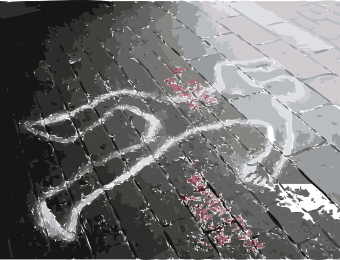 A panel at last weekend’s Deadly Ink 2015 conference represented a spectrum of views about the research lengths mystery writers go to. At the “as factual as possible” end of the spectrum was K.B. Inglee, a writer of historical mysteries who is also a history museum docent and reenactor (talk about living your research!), closely followed by Kim Kash, who seeks a realistic recreation of Ocean City, Maryland, where her fictitious characters and stories play and play out. Setting her mysteries there began when she wrote a tour guide for the city, a compilation of facts and contacts that has since served her well.
 The Millions
 Fates and Furies: A Novel
  he USSR was like in the 1950s and has become “a voice of moral authority for differently minded Russians,” said Masha Gessen’s

