Weekend Movie Pick: See How They Run

Reviews of this movie are mixed, but if you’re looking for something fast-paced and fun, it might just do the trick (trailer). Written by Mark Chappell and directed by Tom George, alcoholic police detective Sam Rockwell and ambitious constable Saoirse Ronan try to solve the mysterious death of an obnoxious American film producer (Adrien Brody). Ronan is completely charming here.

It isn’t a matter of their not having any suspects, it’s having too many. In 1950s London, Brody’s character, Leo Kopernick, has managed to offend pretty much everyone involved in a West End production of The Mousetrap that he’s hoping to make into a Hollywood movie. Lots of backstage shenanigans and back-stabbing theater folks.

The buzz about the movie may have struck the wrong note with audiences when it inevitably compared this story to the work of Agatha Christie. Still, it’s a light-hearted spoof with a super cast. If you remember your nursery rhymes, you’ll hear them echoing throughout, though I never saw even one blind mouse. That particular mouse was already trapped.Rotten Tomatoes critics’ rating: 74%; audiences: 69%.

EQMM/AHMM – Sept-Oct 2022

Reading

The September/October issues of Alfred Hitchcock Mystery Magazine and Ellery Queen Mystery Magazine are, as always, filled with super collections of crime fiction of across the wide playing field of crime fiction. It’s always hard to pick stories to highlight—I could almost tape up the tables of contents and throw darts—but here are a few, limiting myself to three each. First from AHMM:

  • “My Two-Legs” by Melissa Yi – this charming story is about a clever dog who helps solve the crime when his “two-legs” (a young man named Sunil) goes missing. I found the way Yi translates doggie behavior into the narrative of the story simply brilliant.
  • “When the Dams Break” by James A. Hearn, set in hill country, Texas, shows that even the cleverest Lone Star politician will eventually have to confront his past.
  • “Peril in Pasadena” by Edith Maxwell is a fem-fest, with two women PIs, a female scientist victim, and a demonstration of the perils of treating a cleaning woman like she’s invisible. All in the context of the leadup to the Rose Parade.

Ellery Queen also offers up a nice diversity, including:

  • “The Wraith of Bunker Hill” by Paul D. Marks—probably his last published story before his untimely death, it combines Hollywood lore with an intriguing con game involving present-day murders and the Black Dahlia legend.
  • “The Light on the Lagoon: by Canadian author Elizabeth Elwood—it’s never too soon to start teaching the younger generation about the Hitchcock canon.
  • “The Kindness of Strangers” by Twist Phelan—the author perfectly captures the self-absorption and insecurities of adolescent girls that would allow this calamity to unfold—and lives up to her own name here.

Suspect by Scott Turow

When you crack open a new legal thriller by Scott Turow, you know you’ll be in good hands. In the veteran author’s latest novel, Suspect, the hands he puts you in are those of narrator Clarice ‘Pinky’ Granum, a 33-year-old private investigator working for downmarket lawyer Rik Dudek. Pinky has acquired a bit of a reputation as a screw-up, not solely because she is one. Maybe it’s the trail of failed romantic relationships, male and female. Maybe it’s the outrageous ink. Maybe it’s the nail in her nose. Yet she’s earnest in her work supporting Rik, and it’s those very quirks and that sincere dedication that make her a character you want to root for.

This is the 12th book in Turow’s long-running series based in fictional Kindle County, Illinois, reportedly based on Cook County, which is mostly taken up by Chicago. Lucia Gomez is the police chief of the town of Highland Isle and a long-time friend of Rik’s. She asks him to represent her as she fights accusations that she demanded sexual favors from three officers when they were up for promotion. The three-person Police and Fire Commission has scheduled a hearing. It’s always satisfying when a fictional attorney nails an opposing witness to the courtroom wall, trapped in their own lies, as Rik handily does with two of the accusers.

They’re retired now and working for local property magnate Moritz Vojczek, AKA The Ritz, another former cop. When he worked in narcotics, he not only stole cash and dealt drugs, but used them too. When Gomez became chief, she canned him. Now she figures the plot to get her fired is his revenge. You can’t help but worry that his combination of money, connections, street smarts, and viciousness will be more than a match for Rik and Pinky.

The third accuser is a little more difficult to dismiss. At the hearing, he comes up with a photograph of the chief and him in a shockingly compromising position. It’s a picture that will most probably lead to Lucy’s firing, regardless of the commission’s finding. You’ll probably find the chief likeable, but you may start to doubt her. It seems she isn’t telling everything and it’s nerve-wracking to think she’s leading her legal team into serious trouble. When her accuser turns up dead, with Lucy the person most motivated to silence him, Rik and Pinky’s simple sextortion case spins out of control.

Pinky’s out-of-the-office life is going in a couple of interesting directions. She has a new neighbor who’s suspiciously quiet. Using her skills with the PIBOT (Private Investigator Bag Of Tricks), she starts tailing and tracking his middle-of-the-night spying on a nearby technology center. What’s he looking at? Or for? Fans of techno-thrillers will enjoy the deets about surveillance gear and ways to thwart it.

The strategy sessions between Rik, Pinky, and law enforcement are like watching a hard-fought game of chess. They can put all their pieces in the best positions possible, but the Ritz’s next move may be out of their control.

Suspect has a fast-moving story, and much of the enjoyment of it lies in the well-developed character of Pinky. She’s fearless, and you never quite know what she’ll do next. A master plotter like Turow, of course, knows just how to parcel out the clues and the questions to maintain a high level of tension, and Pinky is one of those indelible characters you won’t soon forget.

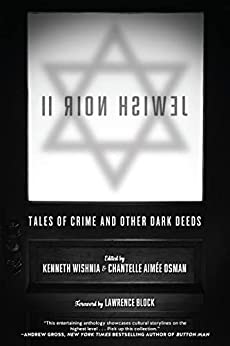
Book Review: Jewish Noir II

Just in time for the High Holidays, comes Jewish Noir II, edited by Kenneth Wishnia and Chantelle Aimée Osman. In his lively introduction, noted crime writer Lawrence Block says you can sum up every Jewish holiday in three sentences: “They tried to kill us. We survived. Let’s eat!” While great food is an essential part of Jewish holiday celebrations, Block points out that the first two sentence are even more tied to the Jewish experience and, as he says, make the combination of Jews and noir almost inevitable. And timely, I’d add, given current trends.

This collection of twenty-three short stories, many of which were written by prize-winning authors, are clustered in six themes: legacies, scattered and dispersed (stories from the diaspora); you shame us in front of the world (embarrassment and dishonor); the God of mercy; the God of vengeance; and American Splendor (stories that could only happen in the United States). Editors Wishnia and Osman point to a subtext of many of the stories: fear amidst the stresses of modern life. Fear of the past, fear of loss, fear of anti-Semitism, fear of violence. Fear that is another signpost on the road to noir. Even with that common thread, the stories themselves are wildly diverse, and readers will find many that appeal, regardless of stylistic preferences. This review tackles only three of them, from across the themes mentioned.

“Taking Names,” the opening story by Steven Wishnia, sits perfectly in the sweet spot between past and present. It begins with the commemoration of a notorious tragedy, the 1911 fire at New York City’s Triangle Shirtwaist Factory. In that calamity, scores of young women jumped nine stories to their deaths, rather than be burned alive. Because of the business owners’ negligence, 146 people—mainly Italian and Jewish immigrants—died. The issue of worker safety is brought up to the present day by reporter Charlie Purpelburg, who’s covering union efforts to increase worker safety in the construction industry. Once again, risky conditions affect the most vulnerable employees—undocumented workers, this time around. They’re not only caught in the political machinations of Jewish developers skirting safety regulations, their wages are being stolen. Enter the social media trolls. Where does all this racial hostility end? No place good.

Craig Faustus Buck’s “The Shabbes Goy” is another tale of exploitation, this time of an elderly woman by her ultra-religious husband, who fills their apartment with gloom and domination. How three members of the younger generation ally to thwart him is quite satisfying. Funny and horrifying, all at once.

“What was I thinking?” is the first line of “The Nazi in the Basement” by Rita Lakin. An elderly Jewish woman living in California returns to New York for a funeral and decides to do the unfathomable. She visits her old neighborhood in the Bronx for the first time in decades. When she lived there, the residents were mostly Jews, Irish, and Italians, and now, before she can park the rental car, she encounters teenagers from Jamaica, Puerto Rico, Hong Kong, and Bangladesh. They wheedle most of her life story out of her. But she doesn’t tell them the ending, the tragic events that produced in her “the scars masquerading as memories.”

Many of the remaining stories address the issues of younger generations of Jews and people living in other countries. Still, it is today’s elderly, grandchildren of the immigrants from the last century who have witnessed the massive social changes of upward mobility, and who, at this point, may be most caught between past and present.

See You Next Tuesday

In See You Next Tuesday, former US FBI agent Ken Harris has brought back his entertaining private investigator Steve Rockfish and his young assistant—now partner—Jawnie McGee. This is the second of a series, following his debut with The Pine Barrens Stratagem earlier this year. In this novel, Jawnie has passed her PI exam, and the two of them have established a bare-bones office in Linthicum Heights, Maryland, just south of Baltimore.

When this fast-moving story begins, the duo is faced with three separate quandaries. Most puzzling is the yellow Nissan Xterra parked across the street with a woman in it who appears to be spying on their office. Most annoying is their new client, the wealthy Claudia Coyne, who’s convinced her husband Roan is stepping out on her and insists they find out who the floozy is. And, most alarming, Rockfish’s father Mack is rushed to the hospital with a possible heart attack.

With his father in the hospital, Rockfish bequeaths the Coyne case to Jawnie and spends time with his father, whose heart is fine, but he’s stressed out, having lost $17,000 in a phony investment scheme.

Jawnie begins following Roan Coyne on Tuesdays and Thursdays, the nights he regularly arrives home late. At first, his actions seem completely above-board, even admirable. On Tuesday evenings, he buys dozens of McDonald’s meals and distributes them to the homeless; on Thursdays, he staffs a soup kitchen. Following these charitable endeavours, he attends meetings in the basement of Allison’s Adult Super Store. When Jawnie peeks in a window, the gathering looks to her like some kind of self-help or religious session. She suspects something shady.

Jawnie trips over a woman camped out in the alley behind the adult store. Some cash waved around convinces the woman—Lynn—to attend the next meeting. One thing they figure out quickly is the several plays on the phrase “See You Next Tuesday,” a bit of risqué wordplay.

Rockfish is determined to get his father’s money back and follows a sketchy clue to the scammers base of operations. When he and Jawnie both turn up in the parking lot behind Allison’s Adult Super Store, they realize they’re working on different dimensions of the same case.

As in the earlier book, Rockfish and Jawnie’s relationship is a work-in-progress. He admires her skills with the computer and with people, and she admires his ability to keep going, in the face of seemingly impossible odds. I like watching them work.

Lynn definitely adds to the team’s strengths and Rockfish’s long-time friend Raffi, who’s also brought on board, will always be a wild card. Destroy and repair describes Rockfish’s relationship with the authorities, and he’s constantly skating somewhere out there on the thin ice. The humorous elements and overall entertainment value of this sequel suggests author Harris has found a winning formula for his cast of interesting characters, and we can look forward to more.

Reading Lessons: Jacked

A crime fiction short story has to accomplish a lot in a compressed space. It of course has to describe the crime involved in enough detail that it makes sense to readers; it has to create believable characters whose fates you care about, at least enough to arouse your curiosity, if not your admiration; and the narrative has to move along briskly—skirting the law isn’t an occupation for laggards. The twenty-one crime stories in the new anthology Jacked, edited by Vern Smith, manage to do all this and then some.

A lot of the stories are pretty dark indeed, and I was interested in how some of the authors managed nevertheless to produce a few laughs. A bit of humor is a welcome addition to what can be a rather bleak assessment of human frailty. Here’s how the stories in this collection manage it.

In several, the situation itself is innately funny. An example is Eric Beetner’s “First Timers,” in which a pair of inexperienced teenagers steal the wrong person’s car. The laughs end before the story does, you’ll find. 

A long story that closes the book is Ricky Sprague’s “The Gryfters.” Again, there’s a wacky premise. The humor arises because all the characters (who are a motley group) play the situation straight, except the narrator Chris. He sees all the weirdness for what it is. His roommate, a young guy on the fringes of criminality, hits upon the bright idea of developing a ride-share service for criminals who need a fast getaway. You know you’re in for an entertaining ride, when, early on, the roommates discuss possible names for the service. Gryft is the apparent choice.

Chris’s hesitant, stumbling conversation shows how swamped he is by fear and doubt. Still, he can’t escape a rapidly deteriorating situation. He’s doomed to be a passenger in the slowest imaginable trip across Los Angeles in a car so ridiculously crowded you’ll envision a circus clown car. What makes the humor work is Chris’s miserable awareness and the cinematic clarity of Sprague’s descriptions. (No surprise then that he has two stories in the 2021 anthology of humorous mysteries, Die Laughing.)

In Jacqueline Seewald’s “Worst Enemy,” the sister of a man accused of murder convinces a private investigator to try to prove her brother’s innocence. P.I. Bob Harris doesn’t want to take the case, because it looks like the brother is the killer—the police have DNA evidence—and he was too drunk to remember anything that might provide an alibi. In fact, he even concedes he might have done it. Despite his original misgivings, Bob digs in, and his unease provides a few unexpected light moments.

Reading a collection like Jacked is a good way to sample different authors’ styles. Editor Vern Smith, himself an author, is an Arthur Ellis Award finalist. The three stories mentioned aside, the collection falls on the dark end of the spectrum, gritty and uncompromising, with a sense that the characters are teetering on the edge of something and may fly off at any moment. Strap on your seatbelt before reading.

Looking for Great Reading? You’ll get my best picks in a quarterly newsletter. Sign up here and receive three prize-winning short stories!

“The Ring of Truth”

My short story protagonist Brianna Yamato—newly minted reporter for The Sweetwater Register, the fictional newspaper of Sweetwater, Texas—is on the story once again. Her latest exploit, “The Ring of Truth” is published in the August 2022 Mystery Magazine. Previously, she solved a four-person homicide and the death by rattlesnake bite of a wind-turbine repairman who had the makings of a potential boyfriend, but . . .

In this story, Brianna is a volunteer with the local community theater group putting on the comedy, A Funny Thing Happened on the Way to the Forum. This is a show my family and I have seen on stage a half-dozen times in various-sized productions—from amateur theater to Broadway (Nathan Lane). And the Zero Mostel movie is a perennial favorite when we need a pick-me-up.

Alas, in the Sweetwater production, the high school senior playing the romantic lead dies one night during rehearsal, and Brianna starts to dig into her story.

Because I’ve written four short stories about Brianna (three published), I have to keep in mind certain details about her world. Since I can’t count on my memory, I created a Word document titled “Facts about the Sweetwater Stories,” which lists the stories in chronological order and when they took place. It has bulleted facts about Brianna, not just her physical description but her way of working (“she tends to let interviewees talk” and “she matches their body language and expressions”), that she lives in a house—not an apartment—with her friend Ruth.

Brianna, being Japanese, tiny (and female) has to hold her own in a sea of big and tall Texas men. They’d love to patronize her, if she’d let them. In several of the stories, she gets comments like “you don’t look like a Brianna” and remarks about immigrants. So I established that her family arrived in California, where she was born and raised, in 1880. Similarly, in the current story, she receives an earful from an interviewee, father of the dead girl who wants her to stop her “medding.” Here’s how she sets him straight.

“You people—” He started to walk away.

“We journalists? Or we twenty-somethings?”

He came back and barked in my face. “You Orientals start your wars, let us settle your hash, then leave your crappy countries and move here, to enjoy everything America offers.”

Oh boy. I said, “My granddad and his brothers served in the US Army in World War II. You’ve heard of the Purple Heart battalion? His youngest brother was killed in Korea. And my dad and uncles fought in Vietnam. What was your unit?” I could hear my editor now.

To break off his death-stare, I said, “Kayla’s friends say nice things about her. I just wondered whether you’d noticed any change, anything unusual, before she died.”

“No. You people saw more of her than we did those last weeks.”

“Oh. We thespians.”

I also keep a list of the businesses she visits—the Triple Joe Café next door to the newspaper, the Southside Grill with its homestyle cooking and the names of its friendly servers, the Egg ‘n’ Oink where Brianna likes to track down police chief Hank Childers while he’s having his Sunday brunch.

When I was a kid, I had family who lived in Sweetwater and visited them every year. The picture in my mind of the community is no doubt vastly different from what the town is today. I read the newspaper online when I’m working on a story to bring myself forward a few decades. But the rattlesnakes are the same.

Unexpected Synchronicities

If you’re a frequent reader, sometimes the parallel threads from several books get all tangled up. Characters with the same/similar names in books by different authors. Intersecting plot lines. Or you read one book that gives you interesting background about something (Daughters of Yalta), and soon you read another dealing with the same events (Gods of Deception). You feel like you turned a corner and ran into a mirror.

Two books I’ve read recently were set in Venice—thankfully at totally different time periods (1612 on one hand and 1928, 1938, and 2002 on the other)—but identical geography and modes of transport, and—OK, this is a stretch—the third, a contemporary mystery about life on a canal in England.

The Gallery of Beauties by Nina Wachsman is a new historical mystery featuring an unlikely pair of protagonists—Belladonna, a famous and wealthy courtesan, and Diana, a rabbi’s daughter who lives in the Jewish ghetto. These beautiful women come to the attention of an artist creating portraits for a “Gallery of Beauties.” Intrigue is high in the city’s Council of Ten, whose mistrustful leaders vie with each other for power and prestige, and leading citizens’ fear of poisoning is so great they employ official tasters. Diana must slip out of the ghetto to pose for the artist, but the chance to wear beautiful clothing and mix with the city’s elite, including her new friend Belladonna, convinces her to ignore the curfew imposed on ghetto residents. Out in the city, she could be challenged at any time. When the subjects of the Gallery of Beauties begin to be murdered, the two women must unravel the mystery for their own survival. An indelible portrait of Venice in the 17th century.

The Venice Sketchbook by Rhys Bowen, narrated by Barrie Kreinik, is mostly set during the days leading up to World War II, when English schoolteacher and artist Juliet Browning begins a romance with the wealthy and devastatingly handsome son of a leading Venetian family. As the Nazis close in, Juliet delays her return home until it’s no longer possible to leave. Without papers and out in a city patrolled by fascists, she could be challenged at any time. (!) Sixty years later, when Juliet dies, her niece Caroline inherits her Venice sketchbook and keys to she doesn’t know what. It will be up to her to discover Aunt Lettie’s mysterious past. This book was too formulaic for me, in terms of the plot and the relationships. But again, Venice.

Idiot Wind by Michael Broihier is set on the Oxford Canal, which runs some 70 miles between Oxford and Hawkesbury in central England. The protagonist, Mac McGuire, with his 60-foot narrowboat, Idiot Wind, delivers food and fuel to boat owners up and down a central portion of this canal. The countryside is beautiful, the boat dwellers are quirky devotees to an idiosyncratic way of life, and it’s a peaceful one—that is, until dead bodies turn up in the canal waters. There’s a lot of mechanics involved in opening and closing the canal’s many locks, repetitive actions I actually found quite soothing. It gave a certain controlled rhythm to the story. No wild car chases, just going with the flow. For me, Broihier’s portrayal of life on the canal was a memorable one. But then, any story with boats is OK with me, and this was a dandy.

Listen To Me

The popular duo of Boston Police Department detective Jane Rizzoli and forensic pathologist Maura Isles returns in Tess Gerritsen’s latest crime thriller, Listen to Me. Number thirteen in the series, it’s the first I’ve read.

The investigators’ probe into the brutal murder of nurse Sofia Suarez is interleaved with what a little research indicates is a story line unusual for this series, the antics of Jane’s mother Angela. Busybody Angela is a Neighborhood Watch unto herself, and a repeat caller to the suburban Revere police department regarding her suspicions about the shenanigans of her neighbors. Her calls are not only a nuisance—ruffling interdepartmental feathers that Jane has to try to smooth—but you can’t help thinking the calls will come back to hurt her. Maybe she is indeed onto something. Or maybe she will have cried wolf too many times, if a real threat emerges. All you can be sure of is that Jane is fast running out of patience with her.

The investigation into Suarez’s death moves forward at a snail’s pace. The woman was well-respected and generally liked by her neighbors and work colleagues at the Pilgrim Hospital Surgical Intensive Care Unit. There’s nothing in those relationships to suggest any animosity toward her.

Unexpectedly, the best lead comes from Jamal Bird, an African-American teenager living on Suarez’s block who helped her set up her electronics. Suarez’s cell phone and laptop are missing. Finding them, or otherwise getting at their records may hold some actionable information. The first interesting thing Jamal tells them is that Suarez bought the computer for some kind of research. They can’t help wondering whether what she was looking into is what put her in the sights of a killer.

A subtheme of the book is the tricky nature of mother-daughter relationships. The younger generation’s behavior is what usually creates these dilemmas, but in three situations in this book, it’s the reverse.

Ultimately, the plot seems a bit of a stretch. However, fans of Gerritsen’s characters may easily overlook that issue. It’s also possible that most books in this series come down a little harder on the police procedural or medical examiner aspects, whereas this book, in devoting so much real estate to Angela’s meddling, has less room to develop those details. It was a little difficult for me to accept that someone who is both the girlfriend and mother of crackerjack police detectives could be so oblivious to the possible bad outcomes she courted. If you haven’t read Gerritsen before, you might want to start with an earlier book.

The Woman in the Library

When you read this latest psychological thriller by Sulari Gentill, The Woman in the Library, you may need to stop every so often and think, where am I? Its clever plot is like a set of nesting boxes, and you have to check which box you’re in. You may be familiar with Gentill’s ten historical novels featuring gentleman detective Rowland Sinclair, and, though this is not part of that series, it displays the same storytelling chops.

In this story, Australian author Hannah is writing a contemporary novel set in the United States. Her main character, Winifred (‘Freddie’) Kinkaid is also an author, working on a new book in the inspiring setting of the Boston Public Library. One day she finds herself at a table with three more young people and idly muses about them. They’d make great characters in her novel, she thinks. So, what you are reading are the chapters in Hannah’s novel, concerning Freddie and her new friends.

They’ve all four quietly checked each other out, but the ice is broken when a piercing scream shatters the library’s stillness. Oddly, the scream pulls them together. They speculate, start to chat, introduce themselves, and soon wander off for coffee as a group. The other woman, Marigold, heavily tattooed, has a rather obvious crush on their tablemate, Whit Metters, and the fourth is a handsome fellow named Cain McLeod. After that unusual bonding experience, the four spend much time together, especially when their curiosity is raised by the discovery of a murdered woman, presumably the screamer, under a table in the library meeting room.

Hannah (fictional, remember) is a best-selling author back in Australia, and as she’s writing about daily life in another country, she accepts the offer from a Boston-based fan to review her chapters and look for anachronisms in vocabulary—‘jumper’ instead of ‘sweater,’ ‘crisps’ instead of ‘potato chips,’ and the like—and location details. This man, Leo Johnson, is also an author, very down in the dumps about the publishing industry’s lack of interest in his book. Chapters of Hannah’s book are followed by a ‘Dear Hannah’ reaction from Leo.

At first, Leo’s advice is confined to minor factual matters and minor adjustments in descriptions. The fact that the fictional Freddie encounters these cultural quirks makes sense, as she’s Australian, too. She’s able to work on her book and live in Boston’s upscale Back Bay, thanks to a fellowship. A neighboring flat is occupied by another fellowship recipient, a character whom Hannah names Leo Johnson. (A third Leo is buried in the name McLeod. Significant?) Her correspondent is delighted at being recognized in this way, which may contribute to his growing intrusiveness. He makes corrections, fights for his suggestions, and sends photos he thinks Hannah might (should?) use for inspiration. His long-distance efforts to encroach on her creative territory made me increasingly uneasy! Creepy!

Meanwhile, in Hannah’s novel, the four friends learn unsettling revelations about Cain McLeod’s past. (Real) author Gentill plays the gradual erosion of trust nicely. Nor is the killing finished. McLeod seems to be the police’s top suspect.

The relationships among the friends are well developed, and, as Freddie gradually falls in love with McLeod, you hope she’s not getting in over her head. Not only is there the risk that he’s not whom he pretends to be, as Marigold warns her, there’s also the inconvenient fact that the police are watching his every move. Her proximity may put her on their radar too. Not until she and McLeod visit an Aussie bar does she recognize how hard she’s been trying to fit in.

This is a very readable book, with a strong sense of menace generated by Leo’s correspondence. I enjoyed it!

Order here from Amazon