Brushes with Literary Fame

On a recent 10-day trip to south Georgia and Alabama, we covered a lot of ground. The trip had many profound highlights. These are the literary ones.

Monroeville, Alabama, was the hometown of author Harper Lee (1926-2016) and the setting for her indelible novel To Kill a Mockingbird. It’s where her long friendship began with Truman Capote (1924-1984), who lived in Monroeville for most of his childhood and became the model for Lee’s character Dill.A fascinating and quirky (in the way of small museums) tribute to Lee and Capote is housed in the Old Courthouse Museum, site of “the most famous courtroom in America” (pictured).

The actual courthouse wasn’t used for the Mockingbird movie, but the set designers arrived from Hollywood to inspect and measure, and their recreation copies the original almost exactly. Apparently Lee thought Gregory Peck was too youthful to play Atticus Finch—that is, until he went into a dressing room to try on his costume: three-piece suit, glasses, and pocket watch. “He came out a middle-aged man,” she said, realizing he’d be perfect.

Montgomery, Alabama, is where Zelda Sayre Fitzgerald (1900-1948) grew up and where, in 1931-1932, she and her husband Scott (1896-1940) lived. That house, in the Old Cloverdale neighborhood, is called a “museum,” but it’s more impactful for knowing you’re walking where this star-crossed literary couple walked, seeing what they saw, knowing he worked on Tender Is the Night in that period and she on her only novel, Save Me the Waltz. Some gilded age clothing (pink suit!) and evening gowns, Gatsby edition memorabilia, and biographical profiles of people they hobnobbed with are on display, along with handwritten pages, and Zelda’s artwork. Is it really 98 years since The Great Gatsby was published?

The house is an Airbnb and a party venue, so it’s enduring quite a bit of wear. We arrived at the same time as a trio of women and were put off by the “closed for private party” sign, but they’d encountered that a few days before. We collectively decided not to take it seriously and all walked in. No problem. No party.

Montgomery is also home to the Hank Williams Museum, a magnet for country music fans. It has a few nice touches: his music plays throughout. On view are his baby blue Cadillac, some of his gorgeous Western-style suits, and a selection of the romance comics he liked to read. “Why do you read that junk?” friends would ask, and he’d say they gave him most of the ideas for his songs. “I’m so Lonesome I Could Cry” comes to mind. Is this stretching the notion of “literary” too far?

Milledgeville, Georgia, was home to one of the greatest Southern Gothic authors, National Book Award-winner Flannery O’Connor (1925-1964). We visited Andalusia, the farm where she lived in the last years of her life and where she raised her prized peacocks. There’s now a museum there dedicated to her work. We also saw from the outside the house in Milledgeville where, as a teenager, she lived with her mother’s family while her father’s health declined.

When her letters were published in 1979 (The Habit of Being), I read them and it was painful to see in the museum the kind of typewriter she used. Like her father, O’Connor had lupus, and in the days before word processing, revisions to stories and novels required retyping—a massive chore for her. However, the trials of the disease were integral to her experience. As writer Alice McDermott said, “It was the illness, I think, which made her the writer she is.”

In Atlanta, Georgia, we saw Roundabout Theater’s production of Charles Fuller’s Pulitzer Prize winning (1982) story, A Soldier’s Play, directed by Kenny Leon. The production has a great cast, with Norm Lewis and Eugene Lee in the leads. Some of the themes are a little dated, but the overall message about the effects of racism is not. Even if the play hadn’t been so good, it would have been worth it to see the renovated Fox Theatre, with its fabulous Moorish interior. The picture can’t do it justice!

(The Amazon links to books above are affiliate links. I receive a small compensation for the recommendation if you click through on them and make a purchase. The product cost is the same to you whether you use an affiliate link or not.)

All photos: Vicki Weisfeld

Writers as Fisherfolk

It’s stretching a metaphor to call writers fisherfolk, but in for a penny . . . If you can stick with me here, I’d say we cast our nets through research. What I like best about the research I do for my short stories and novels is that it gives me ideas, it lets me connect my story to reality, and readers respond because the story seems so “real” to them. Even if a bit of background work gives me only a single word, it will be the mot juste. Our net-casting—our research—happens at several levels—trolling for ideas, diving into the facts, and weighing the catch.

Trolling for Ideas – When readers ask, “Where do you get your ideas?” and a writer says “everywhere,” they mean that every news story, magazine article, museum exhibit, and anecdote goes into that great filing cabinet wastebasket in the brain and comes out, maybe, someday, in some form or another. Very likely, it won’t be identical, it may not even be recognizable, but it will be “inspired by.”

An example: In my novel, Architect of Courage, the protagonist learns a heinous crime was not the fault of the person he blames, and a police detective wisely advises him to let it go. “This will be hard to wrap your mind around. It changes things,” the detective says, adding, “Time and again I see people who can’t give up their theories about who’s to blame for a crime. They hang on for dear life.” This idea came from reading an FBI agent’s blog about the British family of a young woman murdered in Perugia, Italy, a crime for which American Amanda Knox was wrongfully convicted. Despite numerous and lengthy legal proceedings and much evidence exonerating Knox, the dead woman’s parents steadfastly believed in her guilt. The psychology of this case, if not the factual situation, bore directly on my thriller.

Diving into the Facts – Writing page after page and chapter after chapter requires a different, much more focused type of research. Maps, reference books, photo research, the Internet—all keep the writer out of blooper territory. Are there one-way streets in Brussels? Which way do they run? How long does it take to get from the Hotel Sofitel to the American Embassy by cab? What does the hotel neighborhood look like? My architect protagonist is mostly in Manhattan, but he travels to Brussels and Tarifa, Spain, too. I was amused and flattered when a friend contacted me asking for Brussels travel tips. I’ve never been there. The setting just seemed so real to him. (Success!) The facts I uncovered, in turn, led to new ideas and situations that fostered the story’s development.

Weighing the Catch– So, the author has written “The End.” Is it? Probably not. Now that the story is down on paper and the dilemmas of the plot and characters are solved, what more is there to do? It’s time for the big picture. Beta readers help (think “audience research”). In Architect of Courage, I also needed a more specific review of the way police work. Yes, I watch tv, but on the off-chance its depictions of policing aren’t 100% accurate, I sought help. I spent an afternoon with a former NYPD detective and terrorism expert going over every paragraph and every line of dialog that involved law enforcement. “Would a detective say something like this?,” “Is this how it’s done?,” “Does this make sense to you?” Blooper-patrol again, though my questions weren’t just about what do cops do, I was hoping for—and received—insights into how they think.

Your Further Research:
I like Benjamin Sobieck’s The Writer’s Guide to Weapons. It provides “just enough” information.

Need a foreign word? Try the Word Reference website—lots of idioms associated with a word, and online forums with native speakers where you can ask questions. Especially helpful with slang. Many languages.

If you’ve read Architect of Courage and wonder where something or other came from, feel free to ask! And if you haven’t read it, you can order it here. (affiliate link)

Popcorn Weekend: Living and Turn Every Page

Two recent films that couldn’t be more different arrive at the same place. In both, men near the ends of their careers are determined to do the work necessary to leave behind something of importance. They prove that being a beautiful person is not age-related!

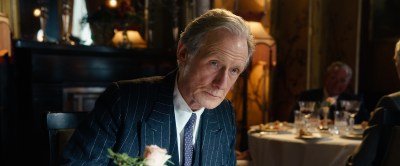
Living is a feature film, with a screenplay by Kazuo Ishiguro, directed by Oliver Hermanus (trailer). Rodney Williams, London bureaucrat in a do-nothing department, is portrayed by Bill Nighy. If you’re a Nighy fan like me, that’s all you need to know to want to see this film, but there are plenty of other reasons to do so. Given a fatal diagnosis, Williams is inspired to do something with his life, to leave behind something meaningful.

The film is more charming than sad, and pretty frustrating with its apt demonstration of how resistant to change bureaucracies are! Even so, it’s possible to make a positive difference in at least some people’s lives. Watch for the dinner scene in which Williams’s daughter-in-law desperately tries to signal her husband to confront his father about what she considers his questionable behavior.

The story closely follows that of a 1952 Japanese film, Ikuru, and you can see how its emphasis on conformity would work well in that culture.

Rotten Tomatoes critics’ rating: 96%; audiences 86%.

Turn Every Page is a documentary that any historian or author or editor is bound to love (trailer). Subtitled The Adventures of Robert Caro and Robert Gottlieb, it tells the story of the half-century of collaboration between author Robert Caro—The Power Broker(now in its 17th printing) and the LBJ biographies, starting with The Path to Power—and his renowned editor, Robert Gottlieb. They were young men when they started; they’re elderly now, and this film about them is fascinating from beginning to end.

The film was made by Gottlieb’s daughter, Lizzie, and she never puts a foot wrong. She brings in other voices, she takes a trip to Texas, she uses maps of New York City to show how Robert Moses’s massive public works projects shaped New York, and when she showed some of the famous books Gottlieb has edited, I sat there saying, “I read that. Read that. Yep. Another one.” In a classroom discussion of The Power Broker, a teacher says we can’t know whether New York would be a better place without Moses’s projects, but it definitely would be a different place.

After dwelling on Moses’s kind of power, Caro undertook a study of political power at the national level and chose Lyndon Baines Johnson as his exemplar. Because when doing his research he “turns every page,” he uncovered information about this period that was previously unknown, about which lesser writers might say, “We’ll never know whether . . .” Now, for better or worse, we do.

Caro takes a novelist’s interest in the impact the exercise of power had on people—from those in the way of one of Moses’s new expressways to the people who supported Johnson’s political wheeling and dealing. In one of the documentary’s more amusing moments, he and Gottlieb, preparing for a grueling day of editing, must scour the Knopf offices to come up with—a pencil.Rotten Tomatoes critics’ rating: 96%; audiences 100%!

The Greenleaf Murders

The sense of place is so strong in some crime novels that their setting—London, Paris, St. Mary Meade—practically becomes one of the characters. You get a good example of that in RJ Koreto’s new mystery, The Greenleaf Murders, in which a Manhattan Gilded Age mansion takes on that role. It’s a non-speaking part, of course, except that the house does seem to speak to the book’s protagonist. She’s a young woman architect planning the top-to-bottom renovation named Wren Fontaine. Not only that, this mansion has secrets to tell.

Koreto introduces plausible antagonists drawn from the nature of Wren work. For example, a downmarket property development firm that renovates (on the cheap) historic homes and turns them into Bed-and-Breakfasts. The developer’s representative has her eyes on the Greenleaf property, despite the pall of neglect hanging over the mansion now. The owner, Steven Greenleaf, is cagey about his plans for the building, but he’s firm on the point that the only current resident, his elderly Aunt Agnes and her companion, Mrs. Ryan, will keep their small apartment. Mrs. Ryan, née Murphy, is the last of a long line of Murphys with an intimate—possibly too intimate—connection to the Greenleafs. For generations, the Murphys worked for the family as maids, drivers, kitchen help, and now, companion. It’s a shared history with all the twists and reversals you may expect, starting with the long-dead corpse Wren finds in the attic.

The police check it out, but, really, they’re more concerned about twenty-first century crimes, and their interest picks up when the property developer turns up dead, shot by the same gun that killed the attic corpse a century before.

Digging for clues to the killings that will help her understand the house gives Wren the opportunity to interact with some interesting secondary characters. There’s Mrs. Ryan’s son, patient Sergeant Ortiz from the NYPD, and a historic preservation purist who knows more about the details of the house than it seems he should. And, there’s a descendant of one of the original owners–a member of the prominent Vanderwerf family. These characters liven up the story, as Wren herself tends to brood. Mostly, she worries she doesn’t have the people skills needed for her job. Houses, ok, she can relate to them, but people? Luckily for Wren, Heather Vanderwerf has every intention of bringing her out of her shell.

The story moves along steadily, but at a stately pace suitable to the mansion itself, as Wren amasses information and develops her theories. I liked Koreto’s writing style and could envision the house and its influence on the characters, though, at times, the dialog seemed contrived to move the plot forward.

To me, the house and the story seem to say we don’t really escape the past, and more of it is with us all the time than we recognize or acknowledge. Wren, with her dedication to preserving the past, as reflected in the homes people designed and lived in, understands this better than most.

Order here from Amazon (affiliate link).

Know someone who loves rehabbing old houses or Gilded Age New York? They’ll love this!

No Dull Sentences!

Award-winning novelist William Gay, who died just over a decade ago, was heralded as a new voice in Southern fiction from the time his first novel, The Long Home, was published in 1999. When I read a reviewer’s comment that Gay was “incapable of writing a dull sentence,” he sounded like someone to find out more about.

In an interview published in 2013, he talked about being considered an heir to Faulkner, O’Connor, and Wolfe, and said that his favorite Faulkner novel is As I Lay Dying, because in it Faulkner writes about ordinary people. That’s a hallmark of Gay’s own writing, and draws on a long career that included house-painting and hanging drywall to support his family by day, writing out stories by night. Understandably, given that schedule, his first book wasn’t published until he was in his late fifties. But he had been on that path since seventh grade, when a teacher noticed his incessant reading and gave Gay a copy of Thomas Wolfe’s Look Homeward, Angel, as long as he’d talk to him about it afterwards. It became one of his favorite books.

Younger people would ask him whether they should write what they want to write, even though it might be a hard road to get it published, or should they turn to genre writing (which is no picnic to get published, either, I’d add). His advice was always that they should write what they wanted to write. I think that’s what lets you, as a writer, put your heart into it and gives you the fortitude to stay with it over time through revisions, more revisions, critiques, and seeking publication.

Many book marketing folks say authors should have their ideal reader, or audience, in mind. Gay disagrees. He believes that, if you do, “the work is going to be more bland, with the rough corners knocked off.” It makes a story more generic and he said he’s always tried to avoid being generic. Much of Gay’s work is dark and violent, coming-of-age stories set in the 1940s and 50s, in which a young person must confront evil. (Stephen King, who knows something about evil, said Gay’s darkest, most Southern Gothic book, Twilight,was his “best read” in 2008.NOT the vampires.)

Gay went on a publish several more well regarded novels and a short-story collection with the juicy title, I Hate to See the Evening Sun Go Down (2002). His story, “The Paperhanger” was anthologized in Best American Mystery Stories 2001.

Looking for Great Reading? It’s my quarterly newsletter. Sign up here and receive three prize-winning short stories!

AI: Wild Hopes, Desperate Fears, and Plot Ideas

Generative artificial intelligence taking over what we thought were uniquely human activities offers of-the-minute plot lines for mystery and crime writers. We’re accustomed to robot reporters covering high school sports and company earnings reports, but ChatGPT and its kin producing the Great American Novel-To-Be? What about AI creating art, video, and audio that mimics specific human voices? Whole new realms of possible crimes open up. A recent Washington Post article calls this an era of “wild hopes and desperate fears.” If the genie isn’t already out of the bottle, it’s certainly punched through the top.

“The capacity for a technology to be used both for good and ill is not unique to generative AI,” the Post article says. Other types of AI tools have downsides too. One that immediately raised skeptical questions is the idea of deploying AI in policing. A recent Guardian article by Jo Callaghan starts by describing the questions such a move would raise. While it makes sense to continue the long-standing practice of sending a robot to check out suspicious packages, San Francisco’s board of supervisors has planned to arm robots with lethal explosives, before pushback caused them to take a step back, maybe only temporarily.

Public confidence in the police has declined sharply in recent years, not just in the United States, but in England and Wales too, Callaghan reports. Meanwhile, it’s a job that “requires hundreds of judgments to be made each day, often under conditions of extreme pressure and uncertainty.” These decisions are informed by a lot of factors unrelated to the situation confronting the officer: past experience, recent trauma, temperament, attitudes and prejudices absorbed from the rest of society. Could AI, presumably relieved of all those extraneous factors, do better? Operate more fairly and efficiently? Maybe, maybe not.

“Narrow AI,” Callaghan explained, can perform specific tasks, like identifying the bomb in that abandoned backpack; “general purpose AI” makes more complicated judgments and decisions, even the kinds public safety personnel must make. The deep learning that enables general purpose AI results from feeding the system huge amounts of data. For example, having been fed millions of photographs of human faces, facial recognition AI can pick out suspects. We see this and other examples of AI creeping into novels and TV cop shows, where, for example, GPS data are used not only to develop “heat maps” of where crimes are likely, but also to predict specific suspects’ likely location or where to look for a missing person. You can see why some authors prefer to set their stories before 1970. The technology is a lot to keep up with.

Callaghan concludes, “Instead of debating what AI will or will not be able to do in the future, we should be asking what we want from our criminal and justice system, and how AI could help us to achieve it.” These are questions crime writers wrestle with too.

Good writing deserves good readers. My quarterly newsletter contains tips for reading, writing, and viewing. Sign up here and receive three prize-winning short stories!

Zoom Cat-astrophes!

The wisdom of a piece of advice in Stephen King’s very useful (and actionable) book, On Writing, has come home to rest in my lap. Purring. Someplace amidst his good advice, he says, “Put the cat out.” In other words, avoid distractions. (No, this is not Save the Cat, that’s another thing altogether!).

Twice lately, I’ve had reason to bow to King. My mystery reading group was reviewing this month’s selection, when my Siamese, William, got his head stuck in a desk-top box of tissues and waved it wildly in front of the Zoom camera. So much for a focused discussion. (Video of an earlier, similar episode attached. Who says cats aren’t willing to conduct repeat experiments?)

Last month, I was the interviewee on a Zoom call about writing, my writing process, and my mystery/thriller Architect of Courage. Kim Ha of the Pennington public library did the interviewing. While a whole checkerboard of Zoomers watched, I had to get up, call my husband, and have him take William away, because he was playing noisily with a plastic bag. Wouldn’t stop, no matter how hard I glared. Talk about wanting to appear “professional”! You can see the interview in this YouTube video if you’re interesting in writing, etc., etc. The thoughtful Kim cut out William’s star turn, however. (I’m hoping that wasn’t the best part!)

So, meanwhile, put the cat out!

The Bone Records

What’s most fun about Rich Zahradnik’s new crime thriller set in Brooklyn, The Bone Records, is the peek into worlds most of us haven’t experienced first-hand. It tells the story of Grigg (Grigoriy) Orlov, whose father has been missing for five months. Grigg is trying to find him.

As the story begins, Grigg searches for Dad between his daytime job working for the city and a more intriguing evening gig at Coney Island’s Conquistador Arcade. He has scoured his Coney Island neighborhood and the Little Odessa portion of Brighton Beach, where Russian émigrés like his father gravitate. A high school teacher, his father was well known and liked. Surely, someone must have an idea whom his father might have connected with, where he might have gone.

Grigg doesn’t fit into the community the way his father always has. His mother, who died when he was a toddler, was from Jamaica. To the Russians, he will always be an outsider. The author gives you a good sense of Grigg’s anxieties and makes them seem well-founded. He feels out of place, and you feel it too.

Late one night, asleep in his empty house, Grigg is awakened by an intruder. It’s Dad! But hard on his heels is a man with a gun. The Orlovs try to escape, and his father is mortally wounded. He leaves Grigg two things: his dying words, which are “Get to Katia. Katia Sokolov—” and a strange black tube. Katia’s and Grigg’s fathers were best friends and left the Soviet Union together. She may know something, but her orbit is another place he doesn’t seem to fit.

Once he and Katia unroll the tube, they discover it is a bootleg sound recording (and not a good one) of the old Buddy Holly song, “Not Fade Away.” In the 1950s, when the Soviet Union was busily banning Western music and performers, rock n roll fans recorded blacklisted songs on discarded X rays and surreptitiously sold and traded them. They called them bone records. Author Zahradnik provides just enough background information about Soviet life to suggest the secrets the fathers left behind. Very possibly, the past has now reached out to snare his father, and maybe Grigg too.

He’s convinced the police won’t give the investigation a good try, and in a well-worn staple of amateur detective fiction, decides he will have to investigate the murder himself. Katia will help. This quest brings him into inevitable conflict with the Russian mafia, vicious crime lords who dominate Little Odessa. Constantly running into new dangers, he’s on a carousel whirling faster and faster. To get off is to die.

The story’s Coney Island amusement park backdrop was fun, and I enjoyed the complex web of relationships in the local Russian émigré community. The neighborhood comprises just a few square blocks in south Brooklyn, yet gives this thriller a distinctive flavor. The result is as much a roller coaster ride for the reader as a turn on the Coney Island Cyclone.

Rich Zarahdnik is the author of the Coleridge Taylor mysteries, including Lights Out Summer, which won the Shamus Award from the Private Eye Writers of America in 2018.

The Power of Story

Howard Gordon, executive producer and showrunner for American television shows like Homeland and 24 was the guest on a recent podcast produced by The Cipher Brief, a think tank focused on national security issues. It’s part of the site’s dip into the way national security is portrayed in popular media—television, movies, and books. And it reflects a truth that Gordon says is found in Richard Powers’s book, The Overstory, “The best arguments in the world won’t change a person’s mind. The only thing that can do that is a good story.”

So, what does it take to make a Hollywood hit “in an age of geopolitical turmoil?” as Suzanne Kelly, head of The Cipher Brief termed it. You don’t have to look far to see that turmoil. Today’s news headlines include the Russia-Ukraine war, China’s world role, a new generation of Palestinian fighters, and repression in Iran and Afghanistan, for starters.

Gordon maintains that his new crime show, Accused, which addresses current social issues, is also germane to national security, because society’s strength is affected by how and how well it functions. Accused, which airs on the Fox network, challenges audiences to understand why a crime was committed. The plot lines are drawn from contemporary issues: violence, race, identity and, as what Gordon called “a vital accelerant to the drama,” social media. He says the show is “a new game every week.”

C’mon, this is tv. Is it just wishful thinking to believe fictional television is “important” in a world where so much serious stuff seems out of whack? We’re so polarized along numerous fault lines there seems no good way for people to come together. Stories, culture, food, are all “Trojan horses for empathy,” Gordon believes. If you show someone other types of people in the context of a story, maybe they will come to look differently at people they encounter in real life.

Again, how do these “culture wars” affect national security? Kelly noted that the age of interpretation and context is gone—people seem too eager “to line up on sides.” As retired four-star General Michael Hayden, a frequent contributor to The Cipher Brief has said, society is not suffering so much from a need to find truth, what we have lost is much more important—a desire and critical capacity to want to find the truth. We’ve lost the desire to respectfully disagree, to negotiate. It’s a loss that affects national security because it makes the job of our enemies so much easier.

Oscar Shorts: Documentaries

Oscar, Academy Awards

The themes of the Academy Award nominees for short documentary films are universal—parents and children, of whatever species, coming to recognize what’s right, care for the world around us. Three are from US directors, one set in Russia is a UK entry, and one from India.

How Do You Measure a Year? (trailer) – American director Jay Rosenblatt answers that question by following the relationship of a father and daughter as she grows from a toddler to a young woman. The father made home movies every year on her birthday that recorded her answers to the same set of questions. Spoiler alert: Asked at age three what she wanted to do when she grew up, the answer was “wear makeup and chew gum.”

The Elephant Whisperers (trailer)– directed by Kartiki Gonsalves and produced by Guneet Monga. In this beautiful nature documentary, a couple in south India takes on the formidable task of caring for an orphaned baby elephant they call Raghu—“a tender and hopeful product.” [Not based on the book, The Elephant Whisperer, set in Africa; and not the same as the movie Elephant Whisperer, set in Thailand.] (You can see it here)

Stranger at the Gate (trailer) – Directed by Joshua Seftel. A returned Marine with PTSD planned to attack Afghan refugees at their Muncie, Indiana, community center and mosque. But fate and faith had a different plan for him, and again, it was a daughter’s influence that mattered. This one was my favorite. (See the whole thing here)

Haulout (trailer) – The UK’s entry, directed by siblings Evgenia Arbugaeva and Maxim Arbugaev. In the desolation of the Siberian Arctic, marine biologist Maxim Chakilev is waiting to observe the annual migration of the walrus population. He makes the melancholy discovery that warming sea temperatures are forcing the walruses to swim the entire distance, with no ice to rest on, much to their detriment. Have you ever seen 90,000 walruses at one time? Now you can! Just be grateful Hollywood never perfected Smell-O-Vision. (see the whole thing here).

The Martha Mitchell Effect (trailer) – Directed by Anne Alvergue and Beth Levison – Martha was the outspoken wife of Richard Nixon’s Attorney General, John Mitchell. She didn’t like what she saw of that administration’s illegal activities with Watergate and said so. They tried to silence her, claiming she was an alcoholic, mentally unstable, and generally damaging her reputation. (But, as Woody Allen once said, “Just because you’re paranoid doesn’t mean no one’s following you.”) (You can see it here)