Foreign Entanglements

The Foreign Girls

Sergio Olguín’s The Fragility of Bodies was one of my favorite books of 2020 (review here). His new one, The Foreign Girls once again features the sexy trouble-magnet, journalist Verónica Rosenthal. When I refer to the books as “new,” bear in mind that these are books in translation and have been out several years already in Olguín’s home country, Argentina. But neither one has lost any of its freshness in the interim.

Verónica has deserted Buenos Aires for the countryside, hoping to put the traumatic events at the conclusion of Fragility behind her. She hooks up with two young European women and they travel together for a while, and stay at her cousin’s remote vacation home with pool. What should be a sun-drenched idyll becomes a compelling noir adventure.

One night after a party at a rich man’s home, the foreign girls are missing. What happened to them and who is responsible consumes Verónica. Even though she’s supposedly not working, she knows how to dig out a story and does it without regard for her own safety.

Both of Olguín’s Verónica Rosenthal books were expertly translated by Miranda France, and published by Bitter Lemon Press.

Order it here from Amazon or here from your local indie bookstore.

The Basel Killings

Swiss author and playwright Hansjörg Schneider’s first Inspector Hunkeler mystery, translated by Mike Mitchell, has already won the Friedrich Glauser Prize, Germany’s most prestigious crime fiction award. Like Olguín’s story, the book was first published in German a few years ago and is newly available in English.

Peter Hunkeler, a Basel police detective, is feeling old. His prostate bothers him, he’s tired, his girlfriend is on an extended stay in Paris, and he’s past wanting to deal with his superiors in the police department and prosecutor’s office who want him to play according to their rules.

Walking home from a bar one dreary November night, a season as dark as this story, he spots a man he knows sleeping on a park bench, but the man isn’t asleep, he’s been murdered, and the earlobe where he always wore a diamond earring has been slit open, the earring gone.

To Hunkeler, the crime is too similar to a case he’s investigating, the murder of a prostitute, whose ear also was slit open. The pearl that was always there, gone. Coincidence? But when a young girl from the gypsy camp outside town is attacked, strangled, and her ear cut, he realizes he has a serial killer on his hands. What do these three very different victims have in common?

Hunkeler has an interesting low-key approach to investigating, and uses his farmhouse in Alsace as a retreat from the city, a place to think more clearly. Like many books by European authors, Schneider’s writing is barebones and straightforward, more Hemingway than Faulkner. Yet I found the characters he created here eminently believable.

Order it here from Amazon or from your local indie bookstore.

Disappointed Expectations

You may have noticed that the book reviews on this website tend toward the positive. I decided a few months ago to post reviews here of only those books I could recommend. I’m choosy about what I read in the first place, but if a book doesn’t meet expectations, OK. What’s the point of giving a tepid review to a book that probably won’t ever come to the notice of most readers? Let those authors have their shot. Tastes differ.

Two books I’ve read lately are exceptions. Both are receiving a healthy dose of publicity—one because the author is popular and the other, a debut, because the publisher has put big bucks behind it. So these books may actually may attract your attention. Here’s what troubled me about them.

The Hollows

Mark Edwards is a popular British thriller writer. He set this story at a family camp in Maine—remote, wooded. A grisly double murder occurred there twenty years earlier, and the local teenager thought to have committed the crime disappears and isn’t seen again. When British journalist Tom and his teenage daughter arrive for a getaway, they learn right away about the killings and that many of the camp’s visitors are murder-porn tourists. Creepy events ensue. Is the place haunted, has the killer been living in the woods all this time, why are people warning them to leave? Of course, they don’t take any of this good advice (or there wouldn’t be a story), but Tom’s second-guessing and the predictable plot become tiresome.

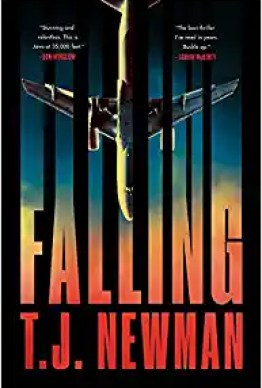
Falling

TJ Newman’s debut thriller is an exciting read, so much so (especially for us formerly-frequent flyers) that it may distract you from the plot’s implausibility. But after you close the book, the head-scratching will begin. Newman is a former flight attendant and captures the technical aspects of commercial flight very persuasively and her flight attendant characters are nicely three-dimensional. In a nutshell, a transcontinental passenger airline is hijacked and the pilot is told he must crash the plane when it reaches New York. If he refuses, his kidnapped wife and children will be killed. But aside from the behavioral clichés in the story, the bad guys’ plot is way way more complicated than it needed to be. Ultimately, it makes no sense. (I won’t say why in case you decide to give it a go.) There’s a lot of feel-good stuff near the end that doesn’t hold up either. This book has already been optioned for film and has Hollywood fakery written all over it.

Karin Slaughter: No Sugarcoating

Last week a library consortium sponsored an interview with best-selling crime author Karin Slaughter to discuss her new standalone thriller, False Witness. She told the interviewer that it is a hard book to talk about without revealing spoilers, and since I’ve read and reviewed it for CrimeFictionLover.com, I can attest to the difficulty.

The book centers on two sisters, Leigh and Callie, who in their mid-teens experience a horrible event that has changed their lives in many ways. The book was a way to for Slaughter to explore her abiding interest in the impact trauma has on people. The bond between the sisters is at the book’s emotional core. Sister relationships, she says, are so fraught. “A sister is the person you can love the most and hate the most at the same time.”

The interviewer noted that many readers consider her books very “dark,” and she said “if my name was Ken Slaughter, they wouldn’t say that.” She puts violent situations in context but does not shy away from portraying them as they are. No sugarcoating. When she was a child, her grandmother would often have a black eye or split lip or even a broken bone. Her uncles would always make light of it, saying how clumsy she was, but as Karin grew older, she realized her grandfather was an abuser. The family’s refusal to face or even discuss the violence “only hurt my grandmother” and enabled the beatings to continue.

Tough issues, indeed, but despite them, Slaughter works considerable humor into her stories. In this one, Callie works in a veterinary clinic and gives the animals humorous (and very apt) nicknames. Her boss, Dr. Jerry, entertains her with intriguing animal stories. “This book was my opportunity to put in all the obscure animal facts I’ve collected,” Slaughter said. “You can’t have all the dark stuff without balance.”

As adults, Leigh is a lawyer in a high-priced Atlanta firm, and Callie a drug abuser, intermittently sober. To research Callie, Slaughter talked with current and former drug abusers and wanted to describe their outlook without defaulting into clichés. She wanted to separate Callie’s base personality from the addiction and does so in part through Callie’s love of animals. In my opinion, Callie comes across as the novel’s most engaging and believable character.

She read Pale Horse, Pale Rider, Katherine Anne Porter’s novel about the 1918 influenza epidemic, which contains so many parallels to our covid experience. The new book includes a pointed epigram from Porter too. Slaughter produces a book a year, generally, and has published 21 novels with more than 35 million copies sold worldwide. Several of her books are optioned for television, and the one closest to airing is Pieces of Her, which will be an eight-part Netflix series starring Toni Collette, premiering in late 2021 or 2022 (covid delays).

Revisited: The Water Knife

By Paolo Bacigalupi, narrated by Almarie Guerra – Recent news about the drought in the American Southwest reminds me to revisit this excellent 2015 thriller that pits governments against each other and new technology (interesting in itself) benefits some people more than others (go figure). Set in the not-too-distant future, Bacigalupi’s story uses real-life issues as a springboard, adds in toxic intergovernmental rivalries and a healthy dose of greed. It’s an exciting and thought-provoking tale.

In Bacigalupi’s Southwest, Nevada (specifically Las Vegas), Arizona, and California are battling over a dwindling water supply caused by climate change, population pressure, and brazen political brokering. The situation has escalated, with states declaring their sovereignty, closing their borders, and enforcing interstate transit rules with armed militias that shoot to kill. Zoners (Arizonans) have few ways to make a living, and those with weapons prey on the desperate poor. To have water is to be rich or, as the saying goes, “water flows toward money.” The wealthy have bought their way into “arcologies”—high-rise buildings with complex plant and aquatic ecosystems for recycling and recirculating virtually every drop.

In Las Vegas, the Cypress arcologies were built by Catherine Case, nicknamed the Queen of the Colorado River, and head of the Southern Nevada Water Authority. Las Vegas is to some extent thriving, because of her cunning and cutthroat tactics. But Phoenix is dying.

Angel Velasquez, one of the book’s three protagonists, is an ex-prison inmate—smart, ruthless, a “water knife” who works for Case, cutting other people’s water supplies. Lucy Monroe is a Phoenix-based Pulitzer-Prize winning journalist and social media star (#PhoenixDowntheTubes) who just might have a lead on some serious water rights, and Maria Villarosa is a highly disposable Texas refugee barely surviving in Phoenix and at the constant mercy of a brutal gang headed by “the Vet,” who throws enemies to his pack of hyenas.

Angel must visit Phoenix to investigate the mutilation death of one of Catherine Case’s undercover operatives, and the plot really starts to flow. He finds Phoenix swimming with Calis—Californians also working undercover to assure that state’s gluttonous water requirements are met, regardless what happens to everyone upriver. Before long, all the players are after the same thing—original water rights documents that would supersede everything on the books—and no one is sure who has them.

While the story is a critique of a policy environment in which local interests are allowed to supersede regional and federal goals, it never reads like a political tract. And, while quite a bit is imparted about the issue of water rights and reclamation strategies, it isn’t a legal or scientific tome, either. It’s a thriller about a compelling trio of people with different motivations, different places in the water aristocracy, and different strategies for coping. The drought, dust, and poverty that envelop Angel, Lucy, and Maria and their cities affect everyone who lives there. “Somehow they hadn’t been able to see something that was plain as day, coming straight at them.”

A lot of powerful straight journalism has been written recently about water rights, droughts, agricultural demand, and intergovernmental bickering about rights. This important novel makes the stakes eminently—and memorably—clear.

Almarie Guerra does a solid narration, putting just the right Latino topspin on the Mexican voices.

Order here from Amazon, or from your local indie bookstore.

As of July 2021, Lake Mead, the nation’s largest water reservoir by volume, is at 37% of capacity.

The Thursday Murder Club

What better review for today, right? I highly recommend the audio-version of Richard Osman’s award-nominated debut cozy crime novel, narrated by Leslie Manville. Osman, who’s had a career in television production, has a second book with many of the same characters already available for pre-order.

Four septuagenarians living in the Coopers Chase Retirement Village, located in the Kentish Weald, meet every Thursday to discuss cold murder cases. Their combination of still being sharp as a tack and varied life experience makes for lively, insightful discussions. Elizabeth, the group’s leader, is the veteran of some possibly clandestine career that took her to countries around the world, Joyce was a nurse, Ibrahim a psychiatrist, and Red Ron a notorious union organizer and gadfly.

Their differences in temperament add to the group’s chemistry. While Ibrahim would like to analyze every factor down to its nub, Ron’s instinct is to barge in and clobber somebody. Elizabeth keeps various thoughts to herself, but Joyce writes a diary, and lucky thing too, because in it, she tells us what the group is thinking and, possibly, why. Joyce’s diary is Osman’s clever way to handle backstory and summary without tedious authorial intrusions.

In an early scene, local DC Donna De Freitas visits the group to five her usual spiel on “Practical Tips for Home Security.” She’s barely begun before Elizabeth cuts her off. “Dear, I think we’re all hoping this won’t be a talk about window locks.” Ibrahim adds, “And no ID cards, please; we know about ID cards. ‘Are you really from the gas board, or are you a burglar?’ We’ve got it, I promise.” “And no need to tell us we mustn’t give our PIN to Nigerians over the phone.”

De Freitas regroups and asks what they do want to talk about, and an enjoyable hour-long free-for-all starts. They recognize that the young De Freitas, for all her amiability, is rather underutilized in the local police department. What she’d like to be working on is a nice juicy murder.

Fate conspires to accommodate her. Tony Curran, a man with a gangster past, and the greedy developer, Ian Ventham, intend to build a second phase of Coopers Chase, on more of the former convent land Ventham purchased from the Church, including plans to dig up the nuns’ cemetery. When Tony is stabbed to death in his kitchen, the Thursday Murder Club wants in on the action. Their new friend Donna De Freitas may be the key, if they can only manage to get her on the murder team and convince her to let them help.

Ventham’s helper Bogdan, has hardly started excavating the graves when he discovers a set of human bones, not in a coffin, but on top of one. This looks like trouble, so he reburies them. Now the Club has two mysteries to solve: who killed Tony Curran, and who is the extra body? Though the local police barely tolerate this amateur assistance, in truth, the oldsters run rings around them. Joyce especially has a way of sounding like a batty old lady, chatting about cakes and tea, while maneuvering the detectives into spilling some useful tidbit.

Although the overall mood is lighthearted, there are moments of sadness, as loss is ever-present in a place like Coopers Chase. That doesn’t stop these four memorable characters from living their lives to the fullest. If you’re in a summertime mood for something light and delightful, this book could be it. If you choose the audio version, Leslie Manville’s narration is tops.

Order here from Amazon.

Kiss the Detective

This is the first book I’ve read by Élmer Mendoza, who’s thought of as “the godfather of narco-lit,” translated from the Spanish by Mark Fried, and the third book in this series. Mendoza has a distinctive writing style, and I’m guessing it’s “love it or hate it.” Definitely, it takes a little getting used to, but well worth it to experience his compelling story and memorable, entertaining characters.

Mendoza, omits quotation marks, “he said” and “she said” some of the time, as well as paragraph changes when the speaker changes at other times.

After a few pages I got the hang of this, and for the most part, I could track the conversations pretty easily (artful writing and excellent translation!). Where I couldn’t—say, when two gangsters of fairly equal power are talking—knowing for sure which one is speaking actually matters less than I thought it might. It’s as if Mendoza submerges you in a river of dialog that sweeps you along through his intriguing plot.

Operating in Culiacán, Sinaloa, police homicide detective Edgar Mendieta is well acquainted with Samantha Valdés, head of the Pacific Cartel. The story opens with an operation against Valdés that offers enough firepower and double-dealing to conjure Don Winslow’s The Border. No time to wait for an ambulance, her crew drives her to the nearest hospital, where she’s in intensive care.

As the cartel members keep their own watch, nervous Mexican army troops and federal police surround the hospital, waiting until she’s well enough to travel, when they’ll transport her to a military hospital in the capital. Word is, they’re coming down on her hard. Still, perhaps the greatest immediate risk she faces is the professional assassin hired to finish her off. And Mendieta too.

The Pacific Cartel fiasco technically belongs to the police department’s narcotics unit. Mendieta has his hands full, anyway, with two unrelated murders: a snappily dressed young fortune-teller whose body was found with fifteen bullets in it; and a small-time crook killed clutching a woman’s purse he’d just snatched.

Mendieta can’t resist some hospital visits to see how Valdés is faring and whether her people know anything about his two cases. In exchange for this information, he agrees to help smuggle her out of the hospital. There’s no going back from this decision. His standing in the police is jeopardized, not to mention his safety.

A call from Mendieta’s ex-wife in Los Angeles further raises the stakes. Their son Jason has apparently been kidnapped by an unknown party, no ransom demanded. Now not only are the Mexican authorities out to get him, he has to negotiate with the FBI as well. The spectre of betrayal lurks everywhere, as Mendieta is pushed into a tighter and tighter corner.

While Mexico’s President Obrador may have declared the war on drugs to be over, Mendieta sees the bodies that keep piling up. Yet, despite threats to his career, his family, and himself he keeps going, finding himself a new girlfriend, sharing beers with friends, holding his head up, a (mostly) honorable man in a dishonorable world. Whose side are you on, Edgar? At times the sides are hard to tell apart.

The book helpfully provides a list of the many characters, which I made good use of. If you give Mendoza’s unusual approach to telling a story a chance, you may find his lively, honest writing refreshing, and Fried’s translation reads beautifully.

Moonlight & Misadventure

Edited by Judy Penz Sheluk — Moonlight & Misadventure is the third short story anthology from Judy Penz Sheluk’s Superior Shores Press, and there’s lots here to like. For this collection, she’s attracted some of the best known and award-winning shorts masters from the US and Canada. Here are just a few of my favorites.

A short story is the ideal place to show off a funny bone because, unlike in a novel, it’s over before the joke gets tiresome. Susan Daly’s humorous “My Night with the Duke of Edinburgh,” involves a long-ago kidnapping of Prince Phillip, or at least his waxwork incarnation. This is just the kind of prank college students would dream up, for exactly the justifications they used, and with a perfect eye-opener of an outcome.

Joseph Walker’s story, “Crown Jewel,” features an obsessive collector of copies of the Beatles’ White Album (he has 348 of them), which is a thing in the United States anyway and makes a case for the advantages of being an only child. Full of delicious double-crosses.

Of considerable charm was MH Callway’s “The Moon God of Broadmoor.” A public health inspector engaged in a clean-up campaign allies with a resident of the Broadmoor apartments who styles himself Thoth, God of the Moon. A chubby, middle-aged man, he routinely dresses in a powder blue tunic, shiny mauve tights, and gauzy iridescent cape. “I see that I have struck awe in your heart,” he says to the inspector when she first spots him. As the two become more acquainted, she finds that, although he’s certainly eccentric, he makes a substantial contribution to his community too. He’s unhinged, unforgettable, and more than a little help in her campaign.

Elizabeth Elwood’s “Ill Met by Moonlight, Proud Miss Dolmas” makes the moon much more than atmospheric. It’s a murder weapon that fells a persnickety school principal during a rehearsal of A Midsummer Night’s Dream. Elwood nicely captures the sharp perceptive powers and callous affect of high-schoolers too.

Treat yourself to twenty moonlit escapades in this outstanding, action-packed collection, which shows the short story genre at its sparkling best.

Order here from Amazon or here from your local independent bookstore.

Fireworks from Ellery Queen

The July-August 2021 issue of Ellery Queen Mystery Magazine, “The World’s Leading Mystery Magazine” is once again filled with dazzling stories, 19 of them. Here are just a few of the standouts:

Elvie Simons’s “Not So Fast, Dr. Quick,” shows how a tidbit of arcane knowledge can grow into a full-fledged plot. Engaging characters too.

Richard Helms’s “Sweeps Week” provides strong characterizations, then rewards with some old-fashioned retribution.

Jon L. Breen’s “The Body in the Bee Library,” wryly humorous, provides satisfying comeuppance.

Dave Zeltserman always makes me smile, even before I start reading. His characters Julius Katz and his cyber-assistant Archie delight once again in “Julius Katz and the Two Cousins.”

Barbara Allan’s “What’s Wrong with Harley Quinn?” takes you to San Diego Comic-Con, and you can witness the attendees’ shenanigans without donning your Spiderman costume.

Joyce Carol Oates’s “Bone Marrow Donor” is only three pages long, but to me was the darkest story of the lot. I couldn’t stop thinking about the nonfiction piece she has written about her own husband’s last day in our local hospital and imagining how that colored this story, even subconsciously. As I remember what she wrote, she received an urgent call to come to the hospital, and, of course, she drove there pell-mell, pulled to the curb on one of the nearby residential streets, and rushed inside. The staff had been right. The end was very near. When she’d signed all the paperwork, she walked to her car in a daze and found this awkwardly spelled note on her windshield: “Learn to park, bich.”

Coming Attractions

Detective Montalbano

Here’s an encomium for one of the most entertaining TV crime series ever—Italy’s Detective Montalbano. Read why it’s so popular, how it was made, and watch clips of the earliest episodes, with a preview for the very last one, coming July 6. We’ve watched all the seasons so far at our house, including the bonus interviews with actors, author, and crew.

Luca Zingaretti, who plays the taciturn Salvo Montalbano is especially interesting. He’s played the role so long, it’s fascinating to hear him display his deep understanding of the role and the values the late author, Andrea Camilleri imbued his creation with.

When the director insisted the show be filmed in Sicily (to the RAI backers’ skepticism), they visited the island’s community and regional theaters to find quintessential Sicilians to play the bit parts—the gossipy landlady of the deceased, the creepy boyfriend, the femme fatale sister—and, believe me, these actors make the most of it!

If you do visit the link above, at the bottom of the story, you’ll see reference to the Young Montalbano series. All the main characters in their younger days, with different actors channeling the later portrayals. A delightful way to feed your obsession! Both series have subtitles, but don’t let that put you off. Honestly, the Italian body language is so transparent, you begin to feel you don’t need them!

When we were in Sicily two years ago, there were Montalbano tours all over the southern region, pointing out places where this or that was filmed, primarily in the charming town of Ragusa (above).

The Unforgotten

Season 4 of the award-winning London-based police procedural about a cold case team returns to PBS, Sunday, July 11. Nicola Walker is brilliant as the lead detective with Sanjeev Bhaskar as her second. There’s a strong and believable relationship between them, and an appreciation of the long-lasting impact murder has on those left behind, handled admirably. Good, solid mysteries too (trailer).

The 21st Century P.I.

Writers who focus on stories about crime are doubtless aware that the job description of today’s private detective has expanded dramatically. Tyler Maroney in his book: How Corporate Intelligence is Reshaping the World, looks far beyond the old-fashioned gumshoe, sitting in his beater, chain-smoking and sipping from a flask outside a no-tell motel. In fact, several of the books I’ve enjoyed most this year take advantage of investigators’ diverse roles–like New Jersey Noir: Cape May, and The Measure of Time.

Says Maroney, who has his own firm, Quest Research & Investigations, America’s 35,000 private investigators “are everywhere,” working for a long list of clients–large companies, government agencies, A-list movie stars, professional athletes, non-profits, sovereign nations, media organizations, and business tycoons. They work for lawyers preparing cases and politicians running for office. Why are they hired? To uncover wrongdoing, right wrongs (real or perceived), satisfy curiosity, and find someone or something, for revenge or competitive advantage. Sometimes the hiring is in a worthy cause, and sometimes it’s merely to feed paranoia.

The book describe a series of interesting cases, among them, helping a civil rights law firm free a wrongly incarcerated client, using computer forensics to ferret out employee fraud, conducting background checks on company executives before a client invests, recovering assets from American debtors hiding abroad, and negotiating with foreign strongmen. In the chapter on a surveillance assignment, he says (and this will be contrary to every television show you’ve ever seen), investigators cannot lie to a subject, they cannot impersonate or deceive. In many states, they cannot fabricate their identities. Despite the many prohibitions, Maroney says, “about once a month in my job, someone asks me to break the law.”

There are good stories here and no doubt equally good ones buried in some of those illegal requests. Enough story ideas to last the decade!

The sheer variety of the work is fascinating, especially for those who write about crime and what it takes to ensure an investigator’s clients “get the hidden information they need. We are lubricant, bandage, and weapon.”

Find it on Amazon or at your local indie bookstore.