Thrills and Chills, Delivered Right to Your Ears

These are “OK-I’ll-take just-another-walk-around-the-block” audiobook listens. Award-nominated stories, great narrations! Click on the titles for my Amazon affiliate links. Enthralled by every one of these!

The End of October

Lawrence Wright, End of October

Lawrence Wright must have really polished up his crystal ball before writing this medical/political thriller about a brutal pandemic. A Pulitzer Prize-winning journalist, he has a knack for describing scientific complexities and capturing both the big political picture and the significant details. The hero of the book is Henry Parsons, an American physician from the Centers for Disease Control trying to control the uncontrollable as world leaders behave in all-too-familiar, self-serving, short-sighted ways. Near the end, the book strays into conventional thriller territory, but the rest is terrific.

Mark Bramhall read the audio version, and I could hear Dr. Anthony Fauci every time he delivered Parsons’s words. Read my full review here.

American Spy

In Lauren Wilkinson’s highly regarded debut novel, it’s 1986 and Marie Mitchell is an FBI intelligence officer. As a young Black woman, she feels passed over, and her boss is hostile. She’s approached by CIA operatives running a campaign to discredit Thomas Sankara, the charismatic, pro-Communist president of Burkina Faso, and Marie agrees to help. What Marie  doesn’t expect is to fall under Sankara’s magnetic spell. Long after leaving Africa, the long tail of retribution is still chasing her, with deadly intent. Marie’s strong relationships with her family give the book tremendous resonance. Narrated by Bahni Turpin, beautifully

Stranger Diaries, Elly Griffiths

The Stranger Diaries Elly Griffiths’ award-nominated story describes Clare Cassidy, a high school English teacher with an affinity for the long-dead gothic horror writer R.M. Holland and his most famous work, “The Stranger,” a short story about a macabre murderer. When colleagues at the school where she teaches—where Holland himself lived and worked—start being murdered, there are mysterious links to Holland and every reason to think Clare may be next. Narrated by Esther Wane, Sarah Feathers, Anjana Vasan and Andrew Wincott, who reads “The Stranger,” bit by bit.

Autumn Thrills

Three exciting reads from 2020. The only thing they have in common is how good they are! Click on the title for my Amazon affiliate link.

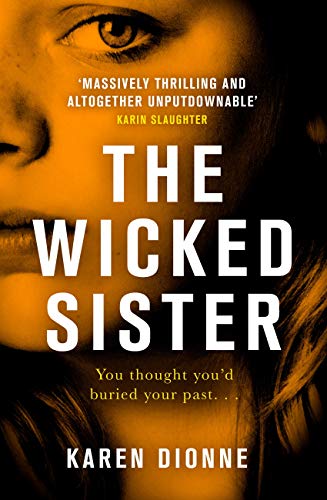
The Wicked Sister

In this all-new story and cast of characters, Karen Dionne reprises elements of her first quite fabulous book, The Marsh King’s Daughter. Again, the setting is the sparsely populated, heavily wooded Upper Peninsula of Michigan, and, again, the natural world plays an important role, underlining themes and supporting the action.

The main character, 26-year-old Rachel, even talks to animals. Dionne’s light touch makes these interactions more revealing of Rachel than weird. Rachel is fragile. She’s just spent 15 years in a mental institution believing she murdered her parents. With chapters narrated by both her mother (“then”) and Rachel (“now”), you learn what really happened and pray for Rachel’s escape. My full review here.

How to Be Nowhere

Fasten your seatbelt for a breakneck, bumpy ride. Tim MacGabhann’s new thriller takes place in the murky regions of Central America

Investigative reporter Andrew and his friend Maya have connected with some pretty dangerous characters over the years, and that past comes roaring back.

The bad guys want the reporters’ help finding their leader’s daughter, a much more difficult and dangerous task than you might imagine. Plenty of dark humor. If Hollywood ever makes a movie of this story, they’ll need a hefty budget line-item for expendable vehicles.

My full review here.

Seven Lies

Elizabeth Kay’s new domestic thriller is an immersive journey into a twenty-year friendship. Jane and Marnie have been inseparable since age eleven, though narrator Jane doesn’t hesitate to explain the many ways they differ.

They work in London post-college, and Marnie meets successful, wealthy, charming Charles. Jane loathes him. When Marnie asks Jane, “You think we’re right for each other, don’t you?” Jane swallows hard and tells lie number one: “Yes, I do.”

Kay strings you along, inviting your complicity, as the box Jane has constructed for herself becomes smaller and smaller and her lies increasingly consequential. My full review here.

Tune Out the Politics: Listen to a Great Book Instead!

earphones

Since I listen to audio versions of books nominated for various crime-writing awards (and there’s a lot of them!), they are almost always excellent listens. Clicking the title gets you to my Amazon affiliate link.

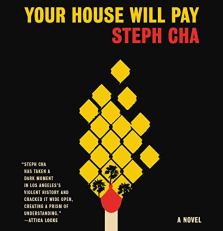
Your House Will Pay

Steph Cha has created a timely and unforgettable story about crime, injustice, and the collision of two Los Angeles cultures, not written in abstract terms, but in the painful impact the conflict has on multiple generations of two families—one Black, one Korean. Listening to this will give you more insight and compassion about American social conflict than in a hundred presidential debates!

Although most of Cha’s story takes place in 2019, it’s rooted in the real-life conflicts that ravaged the City of Angels in the early 1990s. Alternate chapters are told by Grace Park, a young Korean American woman whose parents harbor a terrible secret, and Shawn Matthews, a Black man a decade or so older than Grace. Greta Jung and Glenn Davis narrate. They nailed the multi-ethnic intonations and cadences, even to Grace’s stiffness and Shawn’s barely masked pain. My full review here.

The Magpie Murders

Magpie Murders, Anthony Horowitz

Fans of Golden Age mysteries will recognize the heritage of Anthony Horowitz’s story-within-a-story. Popular mystery author Alan Conway has written a new book. His editor, Susan Ryeland, is reading it, anxious that it be a best-seller and keep the publishing house she works for afloat. You hear Conway read the entire novel, which involves some grisly manor-house deaths and plenty of suspects, and as his story’s climax approaches, the manuscript abruptly stops, three chapters short of an ending. What happens next? Where are those essential chapters? Susan can’t ask Conway; he’s committed suicide. And there seems to be a larger plot afoot. Expertly narrated by Samatha Bond and Allan Corduner.

The Lost Man

Jane Harper’s award-winning family story delves into what binds and separates three brothers working on remote cattle ranges in the Australian outback. It’s a  powerful read. The story begins with the discovery of the most  successful brother’s body in the broiling sun. The outback almost becomes a character itself, with it’s implacable demands and brutal dangers. As the eldest brother sorts out what happened, secrets and missed opportunities are exposed. They may be brothers, but there’s a lot they don’t know about each other. Loved this, and the narration by Australian Stephen Shanahan, whose accent will carry you all the way across the Pacific.

Reading in the Time of Covid

chalk outline, body

A new approach to book reviews: In the past, I’ve reviewed almost every book I’ve read. My thought was that even a so-so review could be helpful to you. The aspects that bothered me might not be issues for you. And, if they are, then a lackluster review might save you the time and trouble of delving into a book you probably won’t like. Going forward from September 2020, I’m abandoning that approach. If you see a book here, it’s because I do recommend it.

Since my last book review post on April Fool’s Day, I’ve read at least 40 books and listened to a dozen more. Many of them were crime fiction, and full reviews on CrimeFictionLover.com are linked below. Click the book title for my Amazon affiliate link. Here’s the first three among the very best, in print. Audio on Thursday.

Rules for Perfect Murders

In this entertaining novel, Peter Swanson has concocted the perfect plot for lovers of classic mysteries. Malcolm Kershaw, the widowed part-owner of Boston’s Old Devils Bookstore wrote a blog post some years ago that described what he considered the best depictions of ‘the perfect murder.’

Now, it seems, someone has taken up his challenge and is recreating those scenarios. Or are they? Is he a suspect or the next potential victim? Desperate for answers, he launches his own investigation and, as the pages fly by, you’ll find there’s more to this bibliophile than you may have assumed. Read my full review here.

Little Altar Boy

John Guzlowski’s riveting new police procedural takes you back to the time before sustained pressure on the Catholic Church brought to light its widespread and systemic problem of child sexual abuse. It’s the late 1960s, in the post-Christmas dark night of winter, and Chicago police detective Hank Purcell is at home, waiting for his 19-year-old daughter Margaret. She has new friends, new habits, and new attitudes, none of which make him happy.

Hank and his partner are trying to resolve not one, but two compelling dilemmas: they’re clearly outraged by the evidence of child abuse among the clergy, but, while they’re trying to save the world’s altar boys, what about Hank’s own child, beset by a whole different class of predator? Hank’s wife Hazel is a useful foil for the two detectives, pressing for handling Margaret’s situation differently. But it seems there are no right answers; each course of action threatens consequences more chilling than the wind blasting off Lake Michigan. Full review here.

Nine Tenths of the Law

This literary crime thriller by Claudia Hagadus Long is part treasure hunt, part family story, part romance, part tragic history woven together in a complicated plot through the strong voice of the story’s sympathetic narrator, Zara Persil-Pendleton. At a Manhattan museum show, Zara and her sister Lilly spot a menorah the Nazis stole from their family many years before. Lilly wants it back.

The women embark on an ill-conceived plot to obtain it, which leads them into some sticky situations. At first these are awkward and funny, but gradually, they become potentially dangerous. Zara, with all her on-point observations and clever asides will keep you amused and interested. Long strikes a nice balance between describing Zara’s inner conflicts and maintaining the action of the story. My Crime Fiction Lover review is here.

Armchair Adventures

In case you wonder what the *** mean in my reviews, there’s a key on the book reviews page. They’re a good guide to how much I liked a book—since my reviews leave open the possibility a read I found meh might suit someone else perfectly.

****The Dead Don’t Sleep
By Steven Max Russo—It has taken five decades for the long arm of retribution to reach halfway around the world and tap the shoulder of Frank Thompson. Today, Frank is a recent widower living in rural Maine, and he doesn’t talk about Vietnam, but the buddies of the American he shot there so many years ago have found him.

The three men are full of plans for tracking him down, and for the massive, highly illegal firepower needed for this mission, one fueled with alcohol, marijuana, and cocaine. They’re all about Frank’s age, nearly 70, which is a stretch. I can imagine guys in their twenties and even thirties talking themselves into such a crazy plan. Yet the author makes clear the years haven’t added to these guys’ store of common sense or muted their violent tendencies.

From his home in New Jersey, Frank’s nephew Bill knows about the danger and wants to help. He has zero experience with the kinds of situations Frank has seen, and his indecision alone is enough to tell you he’d be a liability in any kind of showdown. “Stay home!” I kept telling Bill telepathically. He doesn’t listen.

This is Steven Max Russo’s second thriller. He’s an advertising executive and lives in New Jersey, which accounts for his solid descriptions of life here in the Garden State.

*****The Wild One
By Nick Petrie – This is Nick Petrie’s fifth thriller featuring PTSD-afflicted Iraq and Afghanistan war veteran Peter Ash, and it retains all the energy of his earlier works. Ash’s old war-buddy seeks his help in locating an eight-year-old boy, who disappeared a year earlier from his Washington, DC, home, after witnessing his mother’s murder. The kidnapper is most likely the boy’s own father, the presumed killer, and he’s most hiding out with his tight-knit family in remote northern Iceland.

The mother, Sarah, ran a computer security business. On a client’s servers, she discovered career-ending evidence of criminality among Washington’s political class. She sets up a mirror server with an unbreakably long encryption key preserved in only one form, in the photographic memory of her son Óskar. The bad guys want it.

Ash has plenty of antagonists, aside from his internal demons. There’s the mysterious crew following him: do they want him to find Eric and Óskar? Or not? There is Erik’s paranoid extended family, not averse to ensuring their privacy with violence. There is the head of the Icelandic Hjálmar, relentless in trying to bring Peter in. But perhaps his greatest adversary is Iceland’s brutal, dead-of-winter weather. A more apt metaphor would be difficult to find. So, throw on a couple of sweaters, make yourself a cup of something hot, and settle in for a wild ride.

If there’s anything to object to in Petrie’s work, it’s a tendency to reach a little too far in the closing pages. In this book, a final act of violence puzzled me, because it came out of the blue. But that wasn’t enough to negate everything solid that had gone before. Do note that Ash is now a wanted man and has no passport or I.D. It will be interesting to see how he gets back to Oregon. I’m hoping Petrie plans to tell me.

Photo: Sasint Tipchai for Pixabay

Dust Off Your Library Card

chalk outline, body

You see so many reviews of brand new crime novels on this website because, as you may know, I read and review them for the fantastic UK website CrimeFictionLover.com. Occasionally, I dig into my book pile and find something not suitable for CFL. Possibly it’s a book that’s been out a while, a new book already reviewed by CFL or in one case below, great non-fiction. A post for another day is a list of not-crime books. There is such a thing!

***Identical
By Scott Turow (2013) – if you want a novel full of twists and turns, this one has it. If you want a novel that stretches the bonds of plausibility, you have that too. Twin brothers Cass and Paul (Castor and Pollux, get it?) couldn’t be more different. One is running for city mayor, the other about to be released from jail after 25 years. He pled guilty to the murder of his girlfriend Aphrodite Kronon. Confusions worthy of the ancient Greeks and arising from twinhood are here, fairly predictably.

****Statute of Limitations
By Steven F. Havill (2006) – This is one of Havill’s meticulous police procedurals set in small-town New Mexico. I’ve read three of them, and I love them! A retired police chief abandoned after collapsing from a heart attack, a body in an arroyo, a late-night attack—this Christmas season is certainly not filled with goodwill toward mankind. Under-sheriff Estelle Reyes-Guzman doesn’t miss a beat.

****The Aosawa Murders
By Riku Onda (2005), translated from the Japanese by Alison Watts – Newly published in English, the scenes in this prize-winning book are like a set of still lifes. Different points of view describe a crime in which 17 members of a single family were murdered, with only one survivor, a young blind woman. Gradually, the crime is pieced together. Lovely writing, stellar cover.

***False Light
By Claudia Riess (2019) – This is the second outing for amateur sleuths, art experts, and randy spouses Erika Shawn and Harrison Wheatley. Their challenge this time is to decipher a coded message from a famous art forger, now dead. Supposedly, it will identify some of his works masquerading in prestigious collections as the real thing. It’s a great set-up, and if you’re a fan of art world skullduggery, you may enjoy this, but I found the denouement implausible.

*****Breaking and Entering
By Jeremy N. Smith (2019) – Subtitled “the extraordinary story of a hacker called ‘alien,’” this is the nonfiction story of a woman’s career from her exploits as an MIT undergraduate through to her current role consulting with banks, government agencies, and others on security issues. Cybersecurity is their big concern, and she and her team are cyber experts, but they also routinely prove to clients that good old humanware can be their weakest link. Fascinating.

****Passport to Death

By Yigal Zur, translated from Hebrew by Sara Kitai. This thriller, recently translated into English, features former Israeli security operative Dotan Naor, whose firm has something of a specialty of rescuing Israelis who find themselves in tricky situations abroad. In his new case, a pretty young woman named Sigal Bardon, age 26, has gone missing in Bangkok, and her family wants her back.

Naor is a cynical narrator, intimately familiar with that southeast Asian city, having spent time there off and on for two decades. If he had to guess, he would chalk Sigal’s disappearance up to a drug overdose—heroin, Bangkok gold. There are a lot of bad ways that story can end, and he knows most of them.

Once in Bangkok, Naor takes a room in the heart of Patpong, a nexus of unsavory activity, and a district where information about Sigal, or the woman herself, is likely to be found, traded, or bought. On a sweltering day he takes a ride in an air-conditioned cab. The driver offers the usual drugs and girls, and he also has passports belonging to Sigal Bardon and someone named Micha Waxman. Naor buys both, plus the information that the driver drove them to the train station. This encounter is too much of a coincidence, and Naor wonders who’s trailing him, who recruited this driver, who’s anticipating his mission.

The complicated plot involving a diverse cast of Israeli expats, drug kingpins, and Thai Tourist Police moves along briskly. Sigal herself remains something of a cipher, but the colorful supporting characters—monks, fortune tellers, whore mistresses, and Naor’s old Shin Bet acquaintances, troublesome though they may be—are vivid.

Throughout the story, Naor hears echoes of his past and the scandal that ended his special forces career. Old companions lurk in Bangkok’s dark corners, but are they allies or adversaries? He takes the pessimistic view: “The past surged up and flooded over me like a sewer that had overflowed.”

Every clue that Naor tracks down solidifies his initial impression that drug dealing is at the center of Sigal’s disappearance. But is she still alive? Her sister thinks so, but says little. The drug lords she doublecrossed think so and want her themselves. Waxman thought so, but he’s dead.

Zur’s rich descriptions of Bangkok permeate every scene and engage all the senses. This isn’t a story that could take place anywhere else, and by the time you turn the last page, you may feel like you’ve been there. And you’ll be glad to have made the trip from the comfort of your reading chair, out of danger and chaos.

Zur’s previous thriller Death in Shangri-La was also fun!

Photo: cegoh for Pixabay

Stories of Suspense: Romantic and Otherwise

Reading

Fiction River: Summer Sizzles

In her introduction to Fiction River‘s issue of romantic suspense stories, editor and romance writer Kristine Grayson (pen name of series editor Kristine Kathryn Rusch) says, “I love romantic suspense when it’s done right. When it’s done wrong, it’s seriously mind-numbing.” That must be the type I’d read previously. This issue has made a bit of a convert out of me—I just have to keep finding the good stuff, like these examples:

In Katie Pressa’s story “Night Moves,” a man hospitalized for a head injury that robbed him of his memory kicks into high gear when he’s attacked again. Where did those skills come from? He doesn’t know, but the detective sent to sort out the second attack and prevent another one believes she has a hero on her hands and wants to find out more.

The sparks of romance might be flying between a female helicopter pilot and a laconic Delta Force operator, but their mission in Afghanistan is too dangerous for distractions, in “Flying above the Hindu Kush” by ML Buchman. Super-exciting!

Sabrina Chase’s lighthearted “Need to Know” made me smile. If only real life served up such delicious surprises!

“Totality” by Kristine Kathryn Rusch takes place on the Oregon coast during 2018’s total eclipse and turns it into a tale about a woman whose mentally ill sister is trying to kill herself and the man who may save them both. Nice portrayal of coping with irrationality.

And many more . . .

Ellery Queen Mystery Magazine

Much to like in the March-April 2020 issue! Especially to my taste were:  

The clever police procedural “The Eleventh Commandment” by Paul Charles. So nice to have villains who puts a little thought into their crimes.

Peter Lovesey’s “Lady Luck” is just downright malicious, staring with the ironic first line. Ha!

I’m a fan of John Lantigua’s stories set in Miami’s Little Havana. Like previous ones, “In the War Zone of the Heart” is not only a good story, he spices it up with local culture.

You can read Karr and Wehner’s Passport to Crime story “Here in Tremonia a Crime Fiction Slam . . .” as a long poem, one with a few murders along the way and a happy ending.

In John F. Dobbyn’s entertaining “A Little Help from my Friend,” finally, at last, a story protagonist comes to the aid of his author!

Dave Zeltzerman’s entertaining stories about his modern-day Nero Wolfe/Archie stand-ins Julius Katz and a rectangular bit of hi-grade AI are always fun, especially in “Like a Lightning Bolt,” written from a would-be con-man’s pov. He doesn’t stand a chance.

The polyglot protagonist of Edith Maxwell’s tale, “One Too Many,” discovers she’s just too clever for her own good!

Photo: Carlos Martinez, creative commons license

****Naked Came the Florida Man

By Tim Dorsey – “ʻDon’t shoot guns into the hurricane.’ Elsewhere this would go without saying, but Floridians need to be told,” this antic crime novel begins, as Dorsey takes the familiar Florida man premise to absurd heights (or is it depths?). His hero, the aptly named Serge A. Storms, who has no discernible occupation, has plotted a picaresque adventure for himself and his dim friend, Coleman. Serge will drive them around Florida in his 50-year-old gold Plymouth Satellite, visiting the graves of past Florida luminaries.

Enlightening Coleman along their route, Dorsey/Serge painlessly and idiosyncratically covers Florida’s history, sociology, meteorology, and biology. Before long, you know quite a bit more about this quirky state than you did on page one. Florida with its extreme weather, its swarms of insects, its snakes and gators, its cultural hodgepodge, its tony suburbs and ramshackle sugar cane towns lend themselves perfectly to Serge’s non-stop snarky commentary

Several other plot threads, past and present, weave throughout. First is the story of the deadly 1928 hurricane that created a massive storm surge—not in the Atlantic Ocean or the Gulf of Mexico, where you’d expect, but in Lake Okeechobee—that killed some 2500 people. Pertinent to Dorsey’s tale, a rich sugar baron’s fortune in gold coins was lost in the calamity. The fate of the gold is one of the riches of this tall tale.

Most of the novel is devoted to Serge and Coleman’s adventures and clearly channels Serge’s manic psyche. His mind is like a rambunctious puppy, dashing here and there, nibbling this and that. At times the two men launch into a jag of childishness, racing and chasing each other, finger-painting murals for their motel walls, dressing as clowns, and generally acting up.

It’s hard to reconcile that light-hearted Serge with the man who plans (elaborately, of course) and carries out four diabolical murders. His victims aren’t blameless, but the gruesome methods by which they die almost put me off the book. But I hung in there, and I’m glad. Dorsey was a reporter and editor for the Tampa Tribune for twelve years and has twenty-two previous novels. The Boston Globe calls him “compulsively irreverent and shockingly funny.” A trip with his man Serge is most definitely a wild ride.

Order from Amazon here.

How the West Was Lost: Travel Tips

A recent trip to Scottsdale prompted a return visit to Western Spirit: Scottsdale’s Museum of the West, at 2d Street and Marshall Way—a fine place to spend a couple of hours. There’s a permanent exhibit of Western “stuff,” ranging from saddles to signage to six-shooters, plus special exhibitions.

On view until August 2020 are more than 300 works from the man called “the West’s greatest artist,” Maynard Dixon. Born in 1875, he lived during the time the frontier American West began to disappear.

When he was a child, the wars between Indians and European settlers still raged, Texas cowboys herded cattle north long distances to railheads, and “civilization” was as flimsy as the frontier town stage sets in Blazing Saddles. Dixon not only painted hundreds of notable landscapes and portraits, he was a prolific illustrator, producing cover art for magazines and illustrating popular novels.

Artists gave Easterners their first glimpses of the beautiful and dramatic West, but they were less appreciated on their home ground. Said Dixon,
“In those days in Arizona being an artist was something you just had to endure—or be smart enough to explain why. . . . If you were not working for the railroad, considering real estate or scouting for a mining company, what the hell were you? The drawings I made were no excuse and I was regarded as a wandering lunatic.”

Also at the museum, we had the chance to see a one-man show, “Wyatt Earp: A Life on the Frontier,” in which one of Earp’s descendants gave the true “not-what-you-learned-from-Hollywood” story. It was a lot of fun (tickets best ordered beforehand, though I don’t believe the website makes that clear). While this program may not regularly repeat, the museum offers frequent special events, noted on its website.

By coincidence, on this trip I was reading David Grann’s Killers of the Flower Moon, which puts a tragic twist on the story of the “conquest” of the West. In the 1870s, the Osage tribe had been driven into an unpropitious area—“broken, rocky, sterile, and utterly unfit for cultivation,” according to a Bureau of Indian Affairs agent. The Osage bought the land, located in what became northeast Oklahoma, thinking it so undesirable they would not be evicted again. Maynard Dixon’s works even evoke this suffering.

But the new reservation held a surprise. Oil. For a time in the 1920s, tribe members accumulated dollars in the millions, becoming the wealthiest people per capita in the world. Then the murders began.

It’s a riveting yet almost forgotten real-life tale of greed, corruption, and betrayal that reads like a novel. There’s even a bit part for J. Edgar Hoover, who intuited that solving this case would catapult his little agency—and himself—to national prominence.

Alas, we cannot look back at those days and think the exploitation of our beautiful West ended there. We are still losing it.

Or maybe this post should be titled “Small Museums: Part 2.” (Part 1 here.)